
Key Takeaways
- Confidence building must be slow, positive, and at your dog’s pace. Never force interactions or flood your pet with scary triggers.
- Reading subtle body language is the first step before any training or social time. Learn to spot lip licking, whale eye, and tucked tails.
- Structured games, enrichment, and clear routines are practical tools you can start today at home in Hampton Roads.
- Short, frequent success-based sessions work better than rare, stressful outings.
- Professional help from a positive reinforcement trainer is recommended for very fearful or reactive dogs who show aggression or shutdown behavior.
Understanding Why Your Dog Lacks Confidence
Living in Hampton Roads means your dog encounters many things daily: busy neighborhood streets in Virginia Beach, loud Navy jets overhead, crowded outdoor cafes in Norfolk, and unfamiliar visitors coming through your door. A dog with low confidence may hesitate at the front door, shrink away from passing strangers, or refuse to walk past certain things like dumpsters or construction equipment. These behaviors signal that your pet sees the world as unpredictable and scary rather than exciting.
Several factors contribute to a nervous dog:
- Limited socialization between 3 and 14 weeks of age
- A bad experience at a dog park or vet visit in the past
- Chaotic or unpredictable home environments
- Genetic predisposition toward anxiety
- Chronic pain from undiagnosed health issues
- Long shelter stays before adoption
Even if your puppy missed that critical socialization window, you can still build your dog’s confidence through careful dog training now. The key distinction is understanding whether your pet is generally shy or is reactive and aggressive because they are afraid. A shy dog may freeze or avoid new people, while a reactive dog may bark, lunge, or snap. Both need help, but reactive dogs often require professional intervention from an experienced trainer.
Building confidence in dogs is a long-term project measured in months, not days. Celebrate small wins. If your formerly scared dog now watches a skateboard from a distance without hiding, that is real success.
Reading Your Dog’s Body Language Before You Train
Before you teach anything new, you must learn to spot early stress signals. Missing these cues means accidentally overwhelming your dog, which sets back progress rather than building it.
Watch for these more subtle signs of discomfort:
- Lip licking when no food is present
- Yawning when not tired
- Turning the head away from the trigger
- Whale eye (visible whites of the eyes)
- Tucked tail or tail held low and stiff
- Slow movement or freezing on the sidewalk
- Refusing treats at a busy outdoor cafe
More obvious signs include barking and lunging at other dogs, hiding behind your legs, or shaking during thunderstorms common in Hampton Roads summers. By the time your dog shows these behaviors, they are already over their threshold.
The moment you notice subtle signs is your cue to lower the difficulty. Add distance from the trigger, move to a quieter area, or simply end the outing. Pushing through fear does not teach bravery. It teaches your dog that you will not protect them.
Consider keeping a simple log in your notes app for one to two weeks. Track where and when your dog looks worried. Patterns will emerge: maybe your pet is afraid of sounds from garbage trucks on Tuesday mornings, or always freezes near the same intersection. This information helps you train smarter.
Start with Safety, Routine, and Calm Leadership
No confidence work will stick if your dog does not feel safe at home and on walks. Security comes before socialization.
Create predictable daily routines:
- Feed meals at the same times each day
- Walk consistent routes at quieter times (early morning or late evening in Virginia Beach summers)
- Establish a set bedtime so your dog knows what to expect
Give your dog a designated safe space at home. This could be a covered crate in a quiet corner, a bed behind the couch, or a room where visitors and children are asked not to bother them. When your dog retreats there, respect that boundary.
Your own behavior matters enormously. Avoid yelling, rough handling, or sudden grabs at the collar. Speak in steady, neutral tones even when your dog startles or barks. If you act panicked, your dog learns there is reason to panic. If you stay calm, your dog learns to watch you for cues that everything is fine.
For strong pullers, consider low-stress equipment like a well-fitted front clip harness or Halti style head halter. Painful or restrictive gear can increase anxiety and undermine the confidence you are trying to build.
Gradual Exposure and Counter Conditioning
Confidence grows when dogs face slightly challenging situations in tiny, controlled steps while good things happen. This process has two parts: desensitization and counter-conditioning.
Desensitization means starting far enough from a trigger that your dog notices it but stays relaxed. If your pet is afraid of skateboards on the Virginia Beach boardwalk, you might begin watching from across the parking lot. Only decrease distance when body language stays loose and happy.
Counter conditioning pairs each appearance of the trigger with high-value treats like chicken or cheese. You give treats regardless of what your dog does. The goal is to change their emotional response from “scary thing equals fear” to “scary thing equals good things happen.”
Here is a simple example step plan for a dog scared of a metal dumpster on your walking route:
- Day 1: Stand 50 feet away. Feed treats while the dog notices the dumpster.
- Day 3: Move to 40 feet. Continue treating.
- Day 5: Move to 30 feet if body language remains relaxed.
- Repeat over several weeks, decreasing distance only with success.
Never flood your dog with too much too soon. If you see a setback, step back to an easier distance rather than forcing the issue. Progress is not linear, and that is normal.
Fun Confidence Building Games You Can Play at Home
Games turn training into play and give you immediate tools to use today. Keep sessions short: 2 to 3 minutes, several times a week, ending while your dog is still interested.
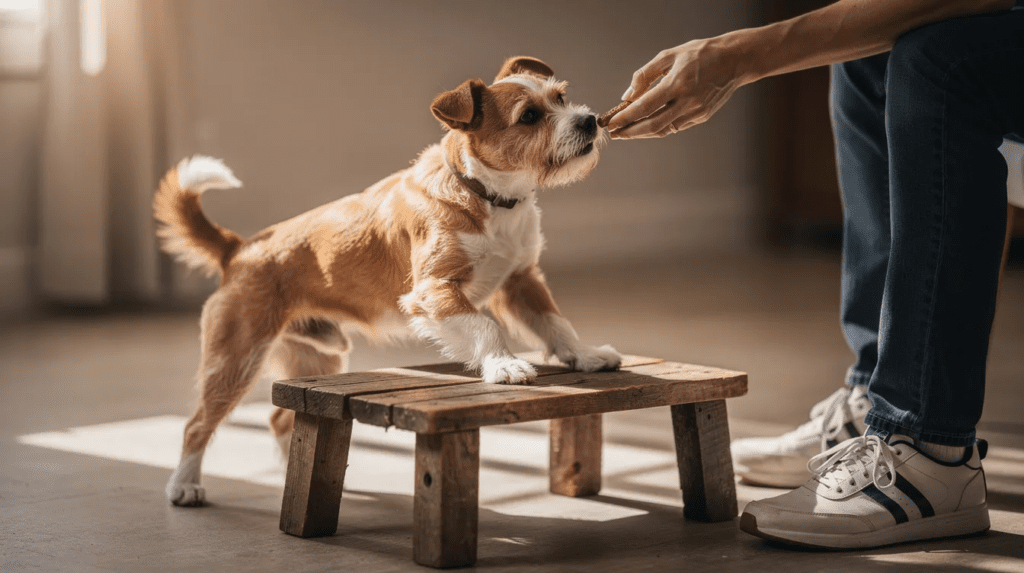
Two Feet On Place a sturdy object like a low step, yoga block, or upside-down food bowl on the ground. Reward your dog for placing their front paws on it. This teaches them to interact with novel objects and builds physical confidence.
Middle Teach your dog to stand between your legs on cue. This creates a safe position where nervous dogs can watch the world from security. Lure with treats and reward when all four paws are between your feet.
Nose Target Hold your open palm or a plastic cone near your dog. When their nose touches it, mark with a “yes” and give a treat. This encourages your dog to actively choose to interact rather than freeze or retreat.
Cardboard Exploration Flatten cardboard boxes on the ground and scatter treats across them. This helps dogs worried by new textures or sounds learn that unfamiliar surfaces lead to rewards.
Safety tips: use non slip surfaces, supervise dogs that chew cardboard to prevent obstruction, and never push objects toward a hesitant dog. Let them approach at their own pace.
These games are ideal for rainy or hot days in Hampton Roads when outdoor walks are limited.
Daily Habits that Build Long-Term Confidence
Confidence building extends beyond formal sessions into everyday life. Small positive experiences throughout the day add up over time.
Add enrichment to your dog’s routine:
- Feed breakfast via food puzzles instead of a bowl
- Hide treats in different rooms for simple nose work
- Take supervised sniffy walks in quieter parks like First Landing State Park
Use positive reinforcement daily by marking and rewarding small brave choices. If your dog steps onto a new surface or calmly watches a passing stroller from a safe distance, say “yes” and give a treat. These moments teach your dog that exploring the world pays off.
Keep walk expectations flexible:
- Choose quieter routes during peak hours
- Take decompression walks on long lines in safe open areas
- Skip crowded off leash dog parks that can overwhelm shy dogs
Short, frequent training sessions a few times a week are better for confidence than rare, overly long outings. Your goal is success, not exhaustion.
When to Call in a Professional Trainer or Veterinarian
Some dogs in Hampton Roads arrive with severe fear or a history of attacks. These cases need expert help beyond what home training can provide, so reaching out for a free consultation with a local trainer can be an important first step.
Seek professional support if you see; watching before and after dog training videos can also help you recognize when issues go beyond basic at-home work:
- Repeated bites or bite attempts
- Serious lunging at humans or new dogs
- Shutdown behavior where your dog refuses to move
- Sudden personality changes that may signal pain
Look for a force-free, positive reinforcement trainer rather than “alpha” or punishment-based programs, and review training plans and pricing options to ensure their services fit your needs. Punishment damages confidence further and can make fearful dogs more dangerous.
A veterinary exam may be needed to rule out medical causes for anxiety. Chronic ear infections, joint pain, or hormonal issues can all generate stress responses that look like behavioral problems.
When interviewing trainers, ask about their experience with reactive or fearful dogs. A good trainer will design a customized plan based on your dog’s history and your specific environment, whether that means busy Norfolk streets or quiet Chesapeake trails, and may recommend different dog training packages tailored to confidence building.
FAQ
How long does it usually take to build a shy dog’s confidence?
Timelines vary widely. Think in terms of months rather than days. Young dogs who simply missed some social experiences may show progress in a few months. Dogs with severe trauma or long shelter histories can take a year or more. Track small improvements: shorter recovery times after a scare, more curiosity on walks, or willingness to try certain things they previously avoided. Plateaus and occasional setbacks are normal parts of the process.
Is it ever too late to help an adult or senior dog feel more confident?
It is not too late. Dogs continue learning throughout life, even past 8 to 10 years old. For older dogs, focus on gentle enrichment and predictable routines rather than intense social goals like crowded events. Celebrate small changes. A formerly shut down dog choosing to explore a new room or calmly greeting a familiar neighbor represents real progress worth acknowledging.
Should I comfort my dog when they are scared, or will that reward fear?
You cannot reward an emotion like fear. Calm reassurance and creating distance from the trigger are appropriate responses. Speak softly, offer a safe place to retreat, and use treats if your dog will eat them. Avoid frantic petting or sounding panicked yourself. Over time, your dog learns that looking to you when scared leads to safety and support, which actually builds confidence and strengthens your bond.
Can off leash dog parks help my nervous dog become more confident?
Busy off leash dog parks are not recommended for fearful or reactive dogs. Unpredictable interactions often make fear worse rather than better. Instead, try controlled, on leash parallel walks with one calm, friendly dog as safer social practice. Many dogs prefer quiet sniffy walks or structured games at home over chaotic group play. Your dog can still live a happy, confident life without ever enjoying dog parks.
What should I do after my dog has a big setback, like a scary incident on a walk?
Immediately give your dog distance and time to decompress. Provide several days of easier, low-stress activities. Temporarily lower your criteria: walk at quieter times, stay farther from triggers than before, and keep sessions short. If setbacks become frequent or intense, contact a professional trainer so a new step by step plan can be created for your specific situation. One bad day does not erase all your progress.
Conclusion
Building your dog’s confidence is a gradual, rewarding journey that requires patience, consistency, and understanding. By recognizing subtle signs of stress, creating a safe and predictable environment, and using positive reinforcement with confidence-building exercises and games, you help your dog feel secure and eager to explore the world. Remember to always proceed at your dog’s pace, celebrate small victories, and seek professional support when needed. With time and care, your once nervous or fearful dog can become a happier, braver companion ready to enjoy life alongside you.
