
How Winnie, a 10-Month-Old Puppy, Improved Leash Manners, Reactivity, and Everyday Obedience in Hampton Roads, VA
At a Glance
Winnie is a 10-month-old female puppy weighing just 17 pounds whose owner sought professional help with leash pulling, barking, and reactivity toward other dogs and neighborhood activity. Despite her small size, Winnie’s pulling was strong enough to nearly knock her owner down on several occasions, creating a particular concern because her owner has a disability.
After trying another local trainer, online training techniques, and several harnesses and collars without finding a workable solution, Winnie’s owner turned to Off Leash K9 Training Hampton Roads. Winnie worked with trainer Lindsey, who provided regular progress reports, photos, and videos throughout her stay. According to her owner’s testimonial, Winnie returned home with significantly improved leash manners, calmer behavior around neighboring dogs, and better responses to commands, while retaining her playful personality.
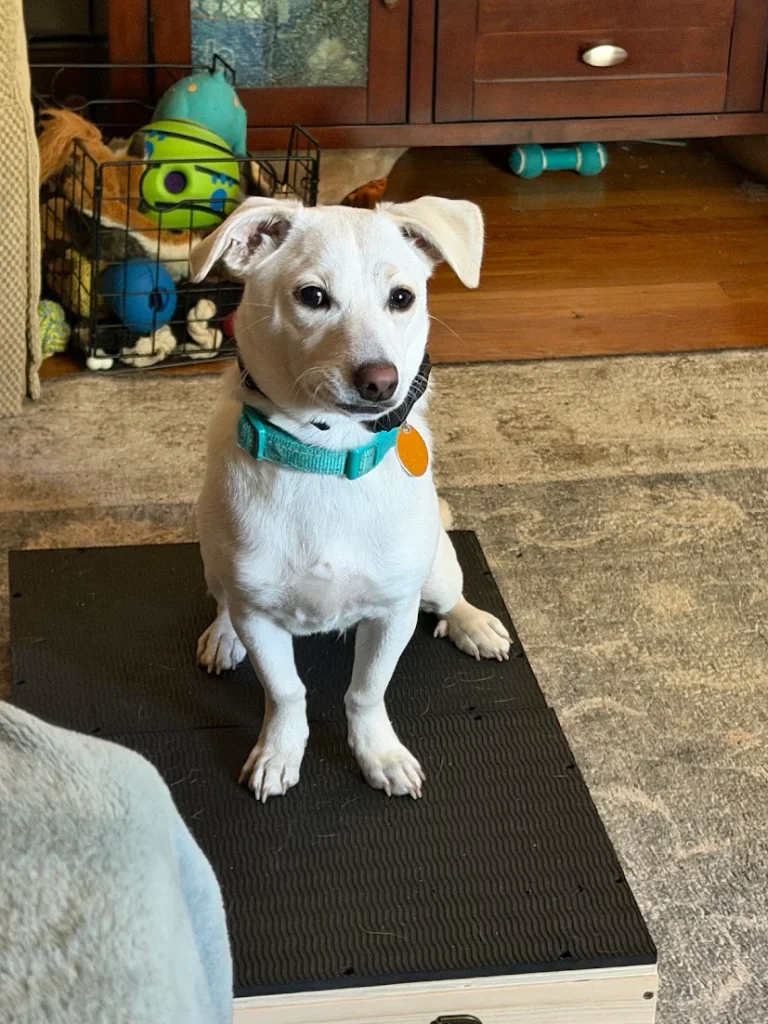
Dog: Winnie
Age: 10 months at the start of training
Weight: 17 pounds
Location: Hampton Roads, VA
Program: Dog Training Program
Trainer: Lindsey
Main Focus: Leash pulling, dog reactivity, excessive barking, place command, obedience, and owner handling
Outcome: Owner-reported improvements in leash walking, reactions to dogs and neighbors, barking at home, command response, and everyday manageability
The Challenge
Before training, everyday walks with Winnie had become stressful and physically difficult for her owner. Although Winnie weighed only 17 pounds, she pulled forcefully on the leash and reacted intensely whenever she encountered other dogs, animals, or neighbors. These behaviors were particularly challenging during walks to the bus stop with her owner’s son.
Difficult Walks and Safety Concerns
Winnie’s owner described several recurring problems:
- Pulling hard and repeatedly during walks
- Barking continuously at neighboring dogs
- Reacting strongly to other animals
- Making conversations with neighbors difficult
- Becoming difficult to manage during trips to the bus stop
- Nearly knocking her owner down on multiple occasions
- Barking at people passing the home’s main window
- Struggling to respond consistently during distracting situations
Because Winnie’s owner has a disability, the physical demands of controlling her during these encounters created an additional safety concern. Her owner wanted to enjoy neighborhood walks, speak comfortably with neighbors, and spend time outside without constantly managing Winnie’s pulling and barking.
Previous Training Attempts
Before contacting Off Leash K9 Training Hampton Roads, Winnie’s owner had already explored several approaches.
These included:
- Working with another local dog trainer
- Trying techniques learned from other trainers
- Following online training guidance
- Purchasing different harnesses
- Experimenting with alternative collars and equipment
Despite these efforts, the owner continued to struggle with Winnie’s behavior. The family needed a training approach that would make everyday handling more manageable and provide clear communication between Winnie and her owner.
The Training Approach
Winnie worked with Lindsey at Off Leash K9 Training Hampton Roads. Her owner specifically sought professional help introducing e-collar training because physical limitations made it difficult to complete the initial training independently. The testimonial describes a training experience that combined obedience instruction, consistent communication, and individualized care.
Leash Manners and Everyday Obedience
Winnie’s training focused on the situations that were most difficult for her owner. These included walking without pulling, responding around other dogs, managing barking, and following commands. Her owner also reported that Winnie learned the place command, which was demonstrated in a photo shared with the review.
The training addressed:
- Loose-leash walking
- Responses to obedience commands
- Managing reactions around neighboring dogs
- Calmer behavior during walks
- Barking control
- The place command
- Maintaining attention during everyday distractions
The testimonial confirms that e-collar instruction was part of Winnie’s training, but it does not identify the exact training package or length of her stay.
Personalized Care With Lindsey
One of the most meaningful parts of Winnie’s experience was the care Lindsey provided. Winnie’s owner appreciated that Lindsey took time to understand her personality, preferences, and household routines. Rather than sending generic progress notes, Lindsey included observations about Winnie’s individual quirks. She also contacted the owner to ask questions and obtain permission about everyday household decisions.
For example, Lindsey asked whether Winnie was allowed on furniture. After receiving permission, she welcomed Winnie onto the couch for cuddles with her family, maintaining a familiar household routine. Winnie’s owner also appreciated seeing photos of Lindsey’s children interacting with Winnie. These details helped reassure the family that Winnie was receiving attentive care throughout her training experience.
Daily Progress Reports and Communication
Throughout Winnie’s stay, her owner received:
- Daily photographs
- Training videos
- Written progress reports
- Personalized observations about Winnie’s behavior
- Questions from Lindsey about household preferences
- Updates demonstrating Winnie’s development
The owner emphasized that the reports reflected Lindsey’s familiarity with Winnie rather than simply providing routine updates. This communication helped the family stay informed while Winnie was away.
The Results
According to her owner’s detailed testimonial, Winnie returned home with major improvements in the behaviors that had previously made daily life difficult.
What Improved:
- Leash walking: Winnie could walk without the persistent pulling her owner previously experienced.
- Reactivity: Her owner reported that Winnie no longer reacted to neighboring dogs during their usual walks.
- Neighborhood interactions: The family could walk alongside neighbors and their dogs more peacefully.
- Barking: Winnie’s frequent barking at people passing the front window decreased substantially.
- Command response: Her owner could use a learned command to interrupt occasional barking.
- Everyday manageability: Walks became easier for her owner to handle.
- Place command: Winnie learned to respond to the place command.
- Calmer behavior: Her owner noticed that Winnie appeared more relaxed during everyday activities.
- Personality: Winnie remained playful, energetic, and affectionate.
From Stressful Walks to Peaceful Neighborhood Outings
One of the most significant changes involved Winnie’s behavior around neighbors and their dogs. Before training, her owner struggled to maintain control whenever another dog appeared. After training, the owner reported being able to walk beside neighbors, enjoy conversations, and remain comfortable while their dogs accompanied them. Neighbors also noticed Winnie’s progress and commented on the difference. This improvement was especially meaningful because the original pulling and reactivity had created physical safety concerns for Winnie’s owner.
Less Barking at Home
Winnie’s owner also noticed a major reduction in barking at people passing the front window. Although Winnie still barked occasionally, her owner reported that a learned command could interrupt the behavior. This made everyday household activity more manageable.
Still the Same Playful Winnie
An important concern for Winnie’s owner was preserving her puppy’s personality. After training, the owner described Winnie as calmer while remaining just as happy and spirited as before. The owner also reported that Winnie appeared affectionate toward Lindsey and showed no concerning behavioral changes upon returning home. These observations reflect the owner’s personal experience and do not establish how Winnie would respond in every future situation.
Trainer Insight
Winnie’s story illustrates how challenging leash behavior can affect more than the walk itself. For an owner with limited physical mobility or a disability, sudden pulling and strong reactions can increase the risk of losing balance or falling. Training goals should therefore consider both the dog’s behavior and the owner’s ability to handle the dog safely.
Why Leash Manners Matter
Loose-leash walking is an important everyday skill because it helps dogs and owners move together with less physical strain. For dogs that react to other animals, training may also involve recognizing triggers, managing distance, building calmer responses, and practicing skills in controlled environments. Progress can vary depending on the dog’s history, emotional state, environment, and continued practice.
The Importance of Owner Communication
Winnie’s experience also highlights the value of understanding a dog’s home routine. By asking about furniture rules, sharing personalized updates, and maintaining communication, Lindsey helped the owner feel involved in Winnie’s care. Clear communication can also help owners understand how to continue practicing after a training program.
Understanding E-Collar Training
Winnie’s owner reported being satisfied with the e-collar training experience and described using a low setting. However, an owner’s inability to feel a particular setting does not establish that the dog cannot feel discomfort or stress. E-collar responses vary between dogs, and the equipment should not be assumed to be painless or appropriate for every dog.
Before choosing any training equipment, owners should discuss its purpose, potential risks, alternatives, and suitability for their dog’s behavior. For dogs experiencing fear or reactivity, careful assessment is especially important because aversive stimulation may increase distress or worsen associations with triggers. Winnie’s results should be understood as her owner’s reported experience rather than a guarantee that the same approach will produce similar outcomes for every dog.
Ready to Improve Your Dog’s Leash Manners in Hampton Roads, VA?
If your dog pulls during walks, barks at neighboring dogs, or becomes difficult to manage around distractions, professional guidance may help you identify a suitable training approach.
Schedule a consultation today to discuss your dog’s behavior, your handling needs, and the training options available in Hampton Roads, Virginia.