Key Takeaways
- Training difficult dogs starts with structure, calm guidance, consistent training, and realistic expectations rather than quick fixes or harsh corrections.
- Many dogs labeled as stubborn or untrainable are actually confused, anxious, overexcited, or living with inconsistent rules that change from day to day.
- Core obedience skills like sit, down, place, heel, and recall create a framework that makes behavior problems easier to manage in daily life.
- Progress comes from repetition, patience, and working at the dog’s pace instead of rushing into crowded parks or complex situations too soon.
- Professional help with obedience and behavior is wise when owners feel overwhelmed, unsafe, or stuck repeating the same problems week after week.
Introduction: Training Difficult Dogs Starts with Structure
Training difficult dogs is possible when owners focus on clear structure, calm routines, and patient, consistent training rather than hoping for quick fixes. The dogs that struggle most often need more clarity, not more force. Reward-based training is strongly supported for teaching and changing behavior because it encourages wanted choices through food, praise, play, and other rewards instead of relying on intimidation or harsh punishment. For difficult dogs, this approach works best when paired with structure, clear boundaries, and consistent follow-through.
Many dogs labeled stubborn or bad are actually struggling with confusion, fear, overexcitement, or a lack of predictable boundaries at home and in public. When rules change daily or expectations shift depending on who is handling the leash, dogs have no reliable pattern to follow. This guide will walk you through the practical steps that help difficult dogs become calmer, more responsive, and easier to live with.
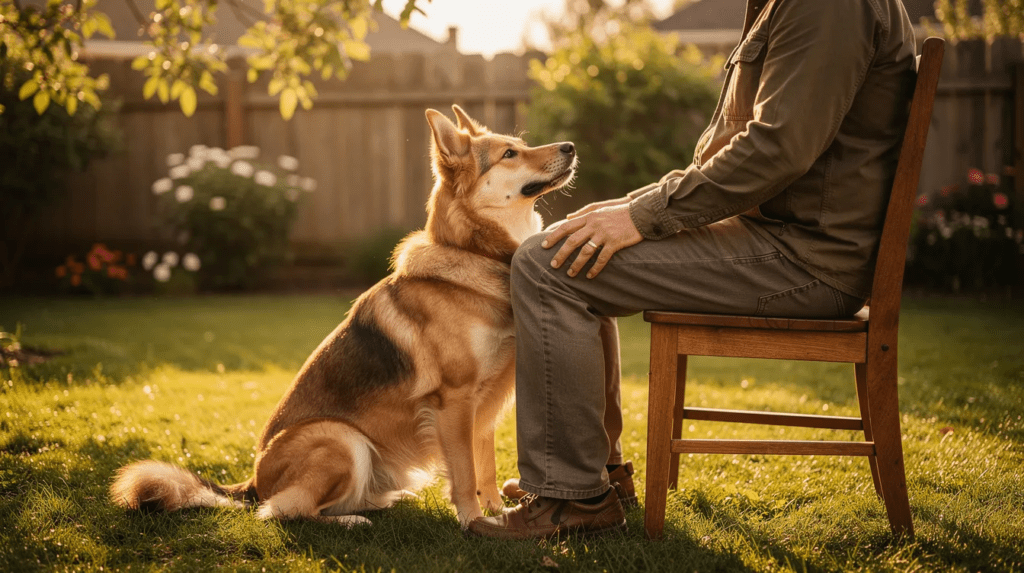
Key Takeaways from This Guide
Here is what this article will cover:
- What makes a dog seem difficult to train and why behavior problems often stem from environmental factors rather than defiance
- Common behavior problems like pulling, jumping, barking, reactivity, and poor impulse control
- The role of dog obedience basics in creating structure and predictability
- Why impulse control training matters for dogs that react before they think
- When professional training may be the safest and most effective path forward
Why Training Difficult Dogs Requires Structure
Training difficult dogs requires structure because dogs need predictable rules, routines, and consequences they can understand. Structure does not mean rigidity or harsh discipline. It means that the dog knows what to expect when the doorbell rings, when food appears, or when the leash comes out.
Dogs without clear boundaries often develop behavior problems like jumping, pulling, barking, or reactivity because they feel responsible for making decisions in chaotic situations. When a dog does not know how to behave, it often chooses behaviors that work in the moment, such as lunging toward other dogs or barking at visitors. Clear guidance is important in dog training because it helps dogs feel secure and understand what behavior is expected in the household. Instead of trying to “dominate” the dog, owners should focus on predictable rules, calm handling, consistent rewards, and fair consequences that the dog can understand.
Difficult behavior often grows out of confusion, fear, overexcitement, lack of boundaries, or inconsistent follow-through rather than simple defiance. Training difficult dogs requires a shift from forceful correction to building mutual respect through psychology and high-value motivation.
Concrete examples of structure include:
- Set potty times and feeding schedules
- Defined sleeping areas and rest spots
- Calm leash manners are practiced at the door before walks
- Clear rules about how and when visitors are greeted
The Foundation and Fairness Rule states that a dog should understand a command in a quiet environment before being expected to obey in more distracting locations. This principle shapes how structured training unfolds: practice in the house first, then the yard, then quiet streets, then busier areas.
How Confusion and Inconsistent Rules Create Behavior Problems
Mixed messages teach dogs that rules change randomly, which undermines training progress and creates frustration for everyone.
Common examples of inconsistency include:
- Allowing jumping on weekends but scolding it on weekdays
- One family member using “sit” while another says “sit down” or “park it”
- Sometimes allowing couch time and other times yelling when the dog jumps up
- Letting the puppy pull on walks when time is short but correcting pulling on longer walks
Inconsistent rules and mixed signals can confuse dogs and slow down training progress, making consistency essential for successful dog training. When each family member uses different commands or standards, the dog struggles to understand expectations, which can look like stubbornness or ignoring commands.
Consistency in training methods, including commands and signals, is crucial to avoid confusing dogs and to facilitate effective training outcomes. Ensuring all family members use the same verbal cues and hand signals can prevent confusion for the dog and aid in consistent training. A simple family meeting to agree on shared rules and command words makes a significant difference.
The Role of Calm Leadership in Building Trust
Calm guidance means quiet, steady direction rather than yelling, yanking, or harsh corrections. Dogs read human body language constantly, and frustration in your tone inhibits their ability to learn.
Dogs feel safer when they sense their owner will handle visitors, strange dogs, and new environments. This sense of safety reduces the need for barking, lunging, or guarding behaviors. When the dog trusts that you have the situation under control, its arousal level drops.
Practical examples of calm leadership:
- Guiding the dog into a place command when the doorbell rings instead of letting the dog rush to the door
- Stepping between your dog and a trigger rather than tightening the leash and tensing up
- Using a quiet, steady voice during training sessions instead of escalating volume when frustrated
Environmental management can prevent dogs from practicing unwanted behaviors and is an important part of training. Using a baby gate to prevent door-dashing or keeping your dog on a shorter leash near triggers gives you control while the dog learns. Consistent, calm responses by the owner build trust over weeks and months, even when results are not instant.
Common Behavior Problems That Need Clear Guidance
Many dog owners seek help for pulling, jumping, barking, reactivity, ignoring commands, and poor impulse control. These dog behavior problems are common and solvable with clear guidance and consistent training.
Key behavior problems include:
- Leash manners issues like constant pulling or zigzagging
- Jumping on people during greetings
- Nuisance barking at visitors, sounds, or other animals
- Reactivity toward other dogs or humans on walks
- Bolting through doors or ignoring recall commands
Each problem is a symptom of underlying patterns like overexcitement, lack of boundaries, fear, or too much freedom too soon. Not all dogs struggle with the same issues, and many dogs improve significantly when their environment and training become more consistent.
Common signs of aggression in dogs can include growling, lunging, snapping, stiff body posture, hard staring, or showing teeth. These behaviors may come from fear, stress, frustration, resource guarding, pain, territorial concerns, or feeling trapped. Because the cause matters, serious aggression should be evaluated carefully instead of assuming the dog is simply trying to be dominant.
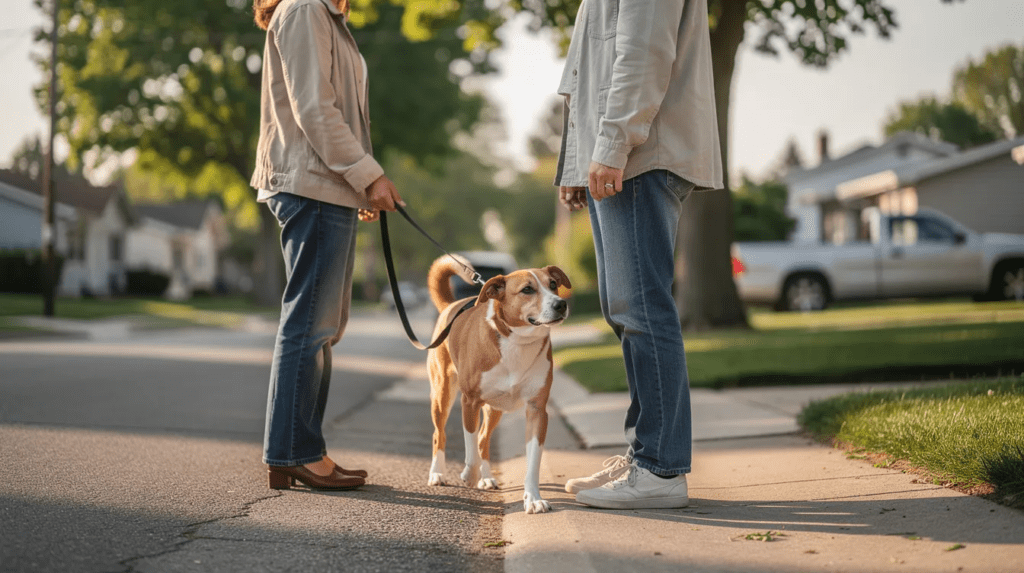
Pulling on the Leash and Poor Leash Manners
Dogs pull because it has worked for them in the past and because they are excited, anxious, or trying to control space. Every time pulling gets the dog where it wants to go, the behavior is reinforced.
Clear leash manners start in low-distraction areas such as hallways, backyards, or quiet streets before progressing to busy sidewalks or parks. Teaching a heel position with clear criteria, like the dog’s shoulder near the owner’s leg, and rewarding calm walking instead of allowing zigzagging and constant sniffing creates reliable behavior.
Identify triggers of unwanted behaviors through a journal to help manage and modify a dog’s reactions effectively. Tracking when and where pulling is worst helps you create a training plan. Consistent training sessions and calm, predictable walks help reduce overexcitement and reactivity over time.
Jumping, Barking, and Overexcitement around People
Jumping and barking often come from overexcitement, frustration, or a lack of impulse control rather than aggression. The dog wants attention and has learned that jumping or barking produces results.
A structured greeting routine helps:
- Ask the dog for a sit or place command before visitors enter
- Only allow interaction when the dog has four paws on the floor
- Ignore the dog completely during jumping or barking outbursts
- Reward calm behavior with attention, treats, and praise
Using a clicker or marker word helps pinpoint the exact moment a dog performs a desired action, enhancing their understanding of the behavior-reward relationship. Repeated success with calm greetings teaches the dog that patience and self-control lead to the attention and affection they want.
Reactivity, Lunging, and Big Emotions on Walks
Reactivity is an exaggerated emotional response to everyday triggers such as other dogs, joggers, bikes, or cars. A reactive dog is not necessarily an aggressive dog, though the behaviors can look similar.
Reactivity can come from fear, frustration, poor socialization, or being asked to handle situations that are too hard, too soon. When a dog acts aggressively or lunges on walks, the root cause is often anxiety or feeling helpless about the environment.
Management strategies include:
- Crossing the street to increase distance from triggers
- Using the place or heel command to redirect focus
- Creating space rather than forcing confrontations
- Keeping the dog’s exposure controlled and gradual
Desensitization and counter-conditioning techniques can help modify a dog’s aggressive behavior by gradually exposing them to triggers while rewarding calm responses. To manage reactivity and stress, training should give the dog enough distance to stay under control and responsive. Simple cues like heel, look, touch, or moving away can help when they are taught calmly and used before the dog is overwhelmed. The goal is not to force obedience through fear, but to help the dog stay safe, focused, and able to learn.
Obedience Skills That Build Better Habits
Basic dog obedience is the foundation for solving behavior problems, especially for dogs with impulse control issues or big feelings. Core skills give the dog clear jobs to do in real-life situations rather than leaving them to make poor choices.
The essential commands include:
| Command | Primary Use |
| Sit | Default behavior for greetings, waiting, and impulse control |
| Down | Longer duration relaxation at home or in public |
| Place | Settling on a specific spot during meals, visitors, or chaos |
| Heel | Calm walking without pulling, weaving, or reacting |
| Recall | Coming when called for safety and connection |
Consistent training on these basics teaches the dog how to think, listen, and respond even when mildly distracted. Breaking tasks into small, manageable steps can help dogs learn commands more effectively, reducing confusion and frustration during training sessions.
Use rewards your dog truly values, such as small training treats, praise, toys, or approved food rewards. Some dogs work well with kibble, while others need something more motivating in distracting environments. Keep rewards small, safe for your dog, and appropriate for any dietary needs.
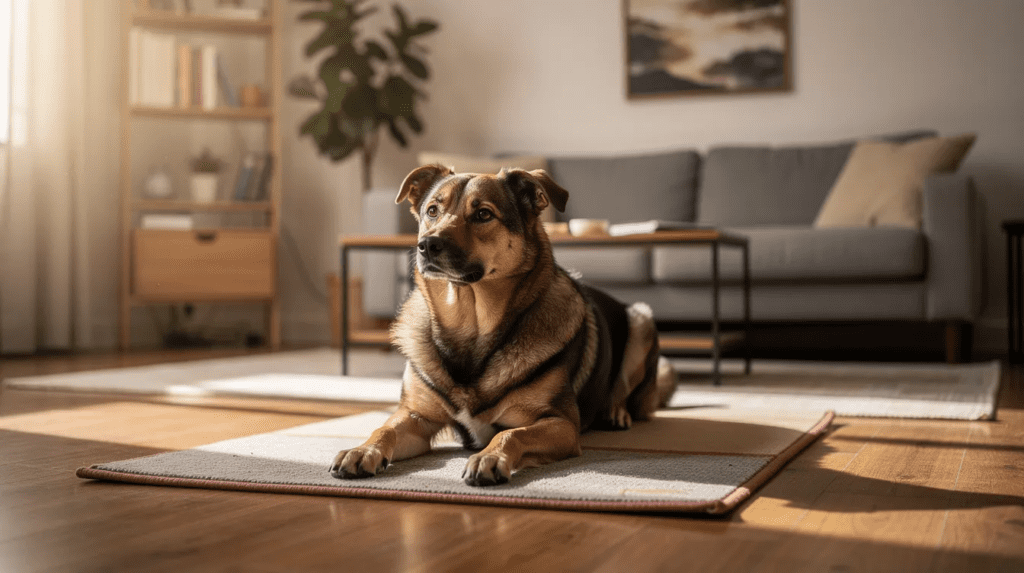
Sit and Down: Everyday Self-Control Skills
Sit serves as a default behavior that can replace jumping, crowding, or pacing when the dog wants something such as food, toys, or attention. It is the simplest way to teach impulse control.
Down is a stronger relaxation position that helps dogs settle for longer periods at home, in waiting rooms, or at outdoor events. Many dogs find it harder to hold a down than a sit, making it valuable for teaching patience.
Use sit and down:
- Before meals
- Before putting on the leash or collar
- Before going out the door
- Before greeting people
Short, focused training sessions of about 5-10 minutes are recommended for effective in-home training, especially for dogs with shorter attention spans. Practice in different rooms of the house, then gradually in the yard or driveway to build reliability in varied environments.
The Place Command: Teaching Calm in Real Life
The place command sends the dog to a specific bed, mat, or cot where it remains until released. This gives the dog a clear and simple job during situations that might otherwise trigger chaos.
Place is especially helpful when:
- Guests arrive at the door
- Kids are playing or running through the house
- Food is on the table during meals
- The owner needs to focus on a phone call or task
In-home training allows for a personalized approach, adapting to the dog’s environment and specific behavioral challenges. Place helps reduce pacing, door-dashing, begging, and other restless behaviors by creating a predictable pattern. Practicing place for short periods several times per day teaches the dog how to relax for longer stretches without constant supervision.
Heel and Recall: Safety and Focus in Motion
Heel teaches the dog to walk calmly next to the handler instead of pulling, weaving, or reacting to everything on the sidewalk. A reliable heel transforms walks from stressful battles into enjoyable exercise for both owner and dog.
Recall is a reliable coming-when-called cue that can prevent dangerous situations like bolting toward traffic, wildlife, or strangers. A strong recall can save your dog’s life.
Training tips for heel and recall:
- Start recall in quiet, fenced spaces or on a long lead before expecting success in open parks
- Reward generously every single time the dog comes when called
- Never call the dog for something unpleasant, like ending playtime or giving medication
- Practice heel in the house first, then gradually add distractions
In-home training can help address specific behavioral issues by providing a familiar environment where the dog feels more comfortable and less distracted. Rewarding the dog generously for coming when called, every time, builds trust and a strong habit of checking in with the owner.
Why Patience and Consistency Matter
Difficult dogs often need more repetitions, slower progress, and very consistent training rules compared with easygoing dogs. Managing difficult dog behaviors requires patience, consistency, and a focus on positive reinforcement rather than punishment.
Behavior change takes time because dogs are building new habits, new emotional responses, and new expectations about how their world works. Stubborn dogs often have independent personalities, which can make training challenging, especially in breeds like Shiba Inus, Beagles, and Dachshunds that were bred for hunting and have strong-willed natures. A German Shepherd may respond differently from a rescue dog with an unknown history.
Consistent training means using the same commands, the same basic routine, and the same follow-through, whether it is a busy weekday or a relaxed weekend. Patient, steady work usually brings more lasting results than intense but sporadic training sessions.
How Repetition Builds Reliable Behavior
Dogs learn best through many short, successful repetitions instead of occasional long sessions that end in frustration. The goal is to create an environment where your dog can get it right over and over.
Short, focused training sessions of about 5-10 minutes are recommended for stubborn dogs, as they often have shorter attention spans and benefit from ending on a positive note. Structure practice into multiple brief sessions per day, focusing on one or two skills like place, heel, or recall at a time.
Consistent training in different locations helps:
| Location | Purpose |
| Kitchen | Low distraction, easy wins |
| Living room | Mild distractions from family |
| Backyard | Outdoor smells and sounds |
| Quiet street | Real-world practice with control |
| Busier areas | Advanced work after mastery |
Training a stubborn dog requires patience, as progress may be slow; it’s important to celebrate small victories and gradually increase distractions during training sessions. Track progress over weeks instead of days so you can see gradual improvements in attention, impulse control, and calmness.
Why Rushing the Process Can Backfire
Taking a reactive or anxious dog straight into crowded dog parks, busy festivals, or complex environments too soon often backfires. The dog becomes overwhelmed and practices the exact behaviors you want to eliminate.
Pushing too fast can create added stress, frustration, or bigger outbursts, which can accidentally reinforce unwanted habits or fear. When a pup struggles repeatedly at a certain level, step back to easier versions of the exercise.
Reward-based training is one of the safest and most effective ways to help difficult dogs learn, especially when paired with structure, consistency, and clear expectations.
Recognizing when the dog needs simpler challenges is part of responsible, humane training. Increasing distance from triggers or returning to a quieter practice area is not failure. It is smart training.
Staying Calm When Progress Feels Slow
Owner frustration is normal when dealing with difficult dogs. However, dogs read human body language and tone constantly, especially when training is challenging.
Training should be enjoyable, and taking breaks when frustration occurs can prevent training from becoming a stressful experience for both the dog and trainer. When either you or your dog feels stuck:
- Take a short break
- End on a small win
- Switch to an easy command like sit or touch
- Walk away and try again in an hour
Celebrate small improvements such as:
- Shorter barking episodes
- Looser leash moments during walks
- Faster response times to basic commands
- Calmer behavior when triggers appear at a distance
Seeking outside support is a sign of commitment to your dog’s well-being, not a sign of failure. Many reasons exist for slow progress, and a fresh perspective often helps.
When Professional Training May Help
Some behavior problems, such as severe reactivity, aggression issues, or chronic anxiety, are safest and most effectively handled with professional guidance. A professional dog trainer can assess situations that feel overwhelming or dangerous.
Consider seeking professional help when:
- There have been bites or repeated close calls with biting
- Aggressive behavior is escalating rather than improving
- Anyone in the home feels unsafe walking or handling the dog
- The dog shows early signs of fear-based aggression in dogs, guarding behavior, or escalating reactivity
- You feel threatened by your own pet
- Progress has completely stopped despite consistent effort
For serious behavioral issues, consulting a professional trainer or veterinary behaviorist is recommended to ensure safety and effective long-term solutions. Experienced trainers can create a step-by-step plan, teach safe handling skills, and help owners read their dog’s body language more accurately.
Professional support often accelerates progress because small mistakes are corrected early, and training can be tailored to the specific dog and household. Training classes or private lessons provide structure that many owners find helpful. Some dogs benefit from board and train programs where they live with trainers during intensive work.
The goal is not to rely on punishment or tools alone. The goal is to build clear communication, trust, safe handling, and reliable behavior through a structured plan that matches the dog’s needs and the owner’s ability to follow through.
Final Thoughts: Training Difficult Dogs with Structure and Patience
Training difficult dogs starts with clear structure, calm and consistent leadership, basic obedience skills, and consistent training habits rather than hoping behavior will improve on its own. The work is not always easy, but it is straightforward when approached systematically.
Many behavior problems are rooted in confusion, overexcitement, fear, or inconsistent boundaries. These issues can be addressed through predictable routines, leash manners work, recall training, impulse control exercises, and mental stimulation through puzzle toys and structured activities. Giving your dog a clear job and predictable expectations changes the dynamic in your house and on every walk.
Training difficult dogs is ultimately about building trust and better communication over time. Every week of consistent practice creates progress, even when it feels slow. The distance between where you started and where you want to be closes gradually with patience.
If you feel stuck, overwhelmed, or concerned about safety, seek guidance with obedience and behavior before problems grow harder to manage. Early support can make daily life safer and more enjoyable for both you and your dog. You do not have to figure this out alone, and getting more help is always an option.
FAQ About Training Difficult Dogs
These questions address common concerns not fully covered above.
How long does it usually take to see progress with a difficult dog?
Many owners notice small changes within a few weeks of daily, consistent training. Simple behaviors like sit and down often improve quickly when practiced correctly. More serious behavior problems such as reactivity, aggression, or deep-seated anxiety can take several months of steady work.
Factors like the dog’s age, history, environment, and how consistent the household is with rules all affect the pace of improvement. A young puppy may adapt faster than an older rescue dog with years of ingrained habits. Focus on weekly progress rather than daily perfection.
Can an older dog still learn better manners and obedience?
Older dogs can absolutely learn new habits because learning does not stop with age. However, they may need more patience and shorter sessions. An adult or senior dog has more history to work against but also more capacity to focus than a distracted pup.
Owners of adult dogs should set realistic goals such as calmer walks, better recall, and improved impulse control rather than expecting dramatic personality changes. Gentle, consistent training produces real results at any age.
Should I avoid all triggers if my dog is reactive?
Complete avoidance is rarely realistic, but smart management is important while your dog learns new skills. The goal is controlled exposure from a safe distance, where your dog can still think, take rewards, and respond to simple cues. If the dog is barking, lunging, freezing, or unable to focus, the situation is too difficult and you should add distance. Over time, you can gradually decrease distance as your dog becomes calmer and more responsive.
What equipment is best for walking a strong or reactive dog?
Secure, well-fitted collars or harnesses and sturdy leashes give owners good control without causing pain or fear. Avoid equipment that relies primarily on discomfort to control the dog. A front-clip harness can reduce pulling for many dogs.
Consulting a professional dog trainer for help choosing and fitting gear ensures you have the right tools. Equipment is only part of the solution and must be paired with consistent training to create lasting change.
How do I know if my dog’s behavior problem is too serious to handle alone?
Seek professional help if there have been bites, repeated near-bites, escalating aggression, or if anyone in the home feels unsafe walking or handling the dog. Feeling helpless or afraid of your own pet is a clear signal that expert guidance is needed.
Early intervention from a qualified trainer or behavior professional can prevent situations from getting worse. Trainers provide owners with clear, safe steps forward and can identify whether the issue requires veterinary involvement for underlying anxiety or medical concerns.
If your dog’s behavior feels unsafe or overwhelming, contact Off Leash K9 Training of Hampton Roads for expert guidance and a personalized training plan. Schedule your consultation and start building safer handling, clearer communication, and calmer behavior with your dog.