Key Takeaways
- Teaching basic commands for dogs early builds better dog obedience, improves safety at home and in public, and strengthens communication between you and your pup.
- Essential early commands include sit, down, place, heel, recall, stay, and leave it, plus solid leash manners that support calmer public behavior.
- Consistency, repetition, and gradually adding distractions are critical for reliable responses in real-life settings.
- Common owner mistakes like inconsistent cues and training only at home will be covered, along with guidance on when professional training support can help.
Teaching your dog essential dog commands early is one of the most valuable investments you can make in your relationship. Whether you have a young puppy or an adult dog new to your home, starting with the right foundation creates lifelong habits that keep your dog safe and make daily life more enjoyable. This guide covers why early training matters, the core dog training commands every owner should teach, and how to practice effectively so your dog responds reliably in various situations.

Why Commands for Dogs Matter Early
Puppies and young dogs learn fastest between 8 and 20 weeks of age, when their brains are highly receptive to forming new habits. During this critical window, basic commands become deeply embedded through positive reinforcement. Dogs introduced to training during this phase can achieve significantly faster mastery rates compared to adults. Positive reinforcement helps dogs learn faster and retain skills for longer compared to punishment-based methods, making early training both effective and enjoyable.
Basic dog obedience commands give structure to your dog’s day. Think about mealtimes, walks, greeting guests, and settling at night. When your dog knows sit before meals, down during dinner, and place when visitors arrive, you create predictable patterns that reduce anxiety for everyone in the house. Effective training uses positive reinforcement, which can include treats, praise, or toys to strengthen these daily behaviors.
The safety benefits of early training are substantial. Recall prevents bolting into traffic, as trained dogs are far less likely to be hit by vehicles. Stay halts your dog at curbs or open doors, averting escapes. Teaching your dog the command “leave it” can help prevent them from getting into things they shouldn’t while on walks, making it an essential part of behavior management. These commands directly protect your dog’s safety in everyday scenarios.
Commands also create clearer communication, reducing frustration and confusion for both dog and owner. Instead of repeating vague requests, you have specific cues your dog understands. This is especially helpful in busy family homes where multiple people interact with the dog on a daily basis.
Starting early does not exclude older dogs. Adult and rescue dogs retain strong learning capacity and can achieve proficiency with consistent training, though it may take a bit longer than with puppies.
Essential Commands Every Dog Should Know
These core dog commands shape everyday behavior and can be taught with positive, consistent training sessions of 5 to 10 minutes. Training sessions should be kept short, ideally lasting 5-10 minutes to maintain your dog’s attention and enthusiasm. Essential dog commands include Sit, Stay, Down, Come, Heel, Leave It, and No. Marker words or clickers can be used to indicate to dogs the exact moment they perform a desired behavior, helping them understand exactly what earned the reward.
Sit
Sit serves as the default polite posture before meals, doors, and greetings. The command “sit” is essential for daily interactions and can be taught by holding a treat above the dog’s head and moving it back to encourage them to sit. This lure-based technique works because most dogs naturally tuck their hindquarters when their head tilts back. Lure-based training techniques are effective for teaching commands, such as using treats to guide dogs into position. Reward immediately as the hips touch the ground, then add the verbal cue after several repetitions.
Down
The command “down” is important for calming an excited dog and can be taught by using a treat to guide the dog into a lying position. From a sit, lower the treat to the floor between your dog’s paws until the belly flattens. Down builds impulse control and is useful during family meals, at cafés, or when visitors arrive.
Stay
“Stay” is one of the most important commands for a dog’s safety, and it can be taught by having the dog sit and then backing away while saying “stay.” Start with 1 to 3 second holds at zero distance, then gradually build duration to several minutes and distance up to 10 to 20 feet over weeks. Use a clear hand signal like palm out and a consistent release word. Commands that promote impulse control include Sit and Stay, which prevent dogs from rushing into potentially dangerous situations.
Place Command
The place command directs your dog to a specific bed or mat to relax. Commands like “go to” can be used to direct your dog to specific locations in the house, making it a fun game and a useful distraction technique. Lure your dog onto the mat, add the cue, and reward downtime. This supports calm public behavior and household manners, especially when you need your dog settled during activities.

Heel
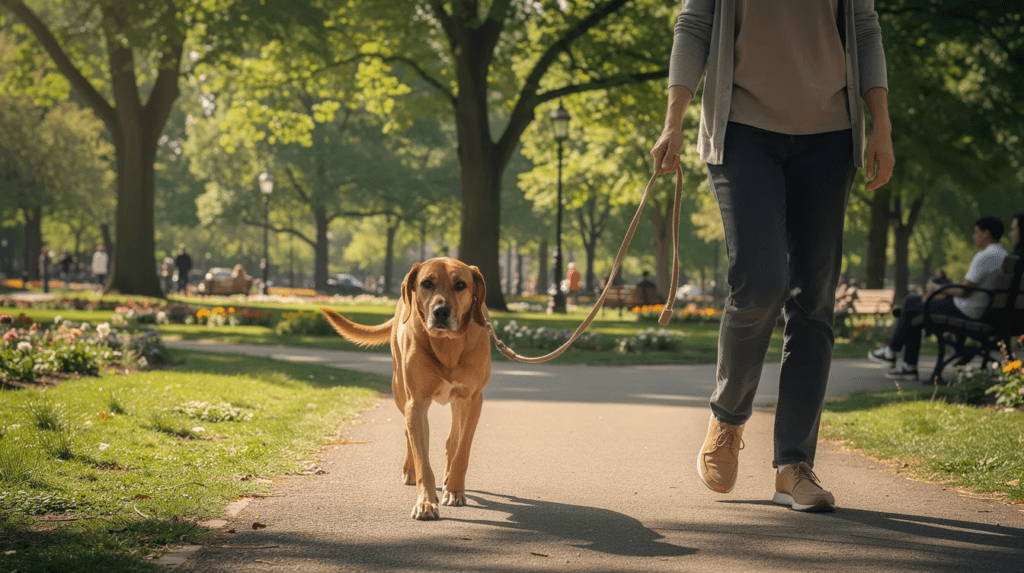
Heel means walking at your side with a loose leash, distinct from casual walking. Reward your dog for maintaining shoulder position during walks. This supports better leash manners in busy areas and prevents the pulling that affects the vast majority of untrained dogs.
Recall (Come)
The command “come” is crucial for a dog’s safety and should be one of the first commands taught, often using a leash to guide the dog towards the owner while saying the command. Start on a long line in a low-distraction area, gently reeling in while praising excitedly. Build reliability before practicing off-leash in open spaces.
Leave It
“Leave it” is a command that helps prevent dogs from getting into things they shouldn’t, and it can be taught by showing the dog a treat and waiting for them to lose interest before rewarding them with another treat. This builds impulse control around tempting items like food, trash, or wildlife. The command “wait” is particularly useful for managing a dog’s excitement when guests arrive, helping to prevent them from rushing to the door.
Once these basics are solid, you can add fun extras like shake, spin, or teaching your dog to “bring it” to retrieve specific items. Teaching your dog to “find it” involves hiding an item and encouraging your dog to sniff it out, which can be a fun game and also useful in real-life situations. However, the essential commands should always come first.
How to Practice Commands Around Distractions
Many dogs obey perfectly at home but struggle outside because they were never trained around real-life distractions. Practicing in low-distraction areas helps with initial training before introducing distractions. Your dog needs to learn that commands matter everywhere, not just in your living room.
Follow a step-by-step approach:
- Start indoors with no distractions
- Move to your yard with mild distractions like toys or family movement
- Progress to quiet streets with moderate distractions
- Finally, practice in busy areas like parks or pet-friendly stores
Concrete examples of distractions include other dogs passing on walks, children playing, delivery trucks, and wildlife like squirrels. The command “watch me” is beneficial in busy environments, allowing you to redirect your dog’s attention away from distractions, which is crucial for effective behavior management.
Lower your criteria at first in new places. Shorten stays to 2 seconds and keep recall distance to 5 feet so your dog can succeed and be rewarded. Gradually increasing difficulty in training can be achieved through the “5 D’s”: distance, duration, distraction, direction, and disappearing. This structured approach prevents overwhelming your dog.
Use a leash or long line for safety while practicing recall, heel, and place in public spaces. This prevents your dog from rehearsing the behavior of ignoring commands. Hand signals are particularly useful in noisy environments where verbal commands may not be heard, allowing for effective communication with your dog.
Practice impulse control by asking for sit, down, or place before going out the door, crossing streets, or greeting new people. These everyday moments become powerful training opportunities.
Common Mistakes When Teaching Commands
Most owners make similar training mistakes, and recognizing them can improve results quickly. Small adjustments often lead to noticeable progress.
Inconsistent Cues
Changing words or hand signals confuses your dog. If one person says “down” and another says “lay down,” your dog has to guess what you want. Consistency in commands and signals among all family members is crucial for effective dog training. Agree on specific commands and stick with them. To teach hand signals effectively, start by getting your dog’s attention and then use a visual cue along with a verbal command, gradually phasing out the verbal cue as they learn. Consistency in hand signals is crucial; once you choose a signal for a command, it should remain the same throughout the training process to avoid confusion.
Repeating Commands
Saying “sit, sit, sit” teaches your dog to respond only after multiple cues. Give the cue once, then help your dog succeed through body position or a lure, and reward immediately. This builds responsiveness to a single command.
Training Only at Home
Many owners never practice around distractions, so their dog’s obedience breaks down in public behavior situations. Your dog needs to learn that commands apply everywhere, not just in familiar settings.
Long, Unfocused Sessions
Short, frequent sessions with clear goals outperform rare, overly long practices. Sessions exceeding 15 minutes often cause fatigue and increased errors. Use 5 to 10 minute sessions several times throughout the day.
Accidental Rewards
Talking to, petting, or allowing pulling on the leash can reward unwanted behaviors like jumping or dragging on walks. Watch for moments when you might accidentally encourage the behavior you want to stop.
Moving Too Fast
Expecting perfect heel, stay, or recall around distractions before your dog has mastered them in easier environments leads to frustration. Follow the 80/20 rule: aim for 80% success before increasing difficulty.
Teaching hand signals can be beneficial for dogs that develop hearing loss as they age, ensuring continued communication even if they become hard of hearing or deaf. This is a great reason to incorporate visual cues alongside verbal commands from the start.
Final Thoughts
Early training of core commands for dogs creates safer, calmer, and more enjoyable life together. When your dog understands what you expect, daily routines become smoother and outings become less stressful.
Reliable sit, down, place, heel, recall, stay, and leave it support everything from front-door manners to relaxed leash walks. Consistent training, clear communication, and gradual exposure to distractions are the keys to long-term success. Your dog learns to respond anywhere, not just at home.
If you feel stuck or overwhelmed, consider working with a professional trainer. A tailored plan can help you build solid obedience and better manners faster than struggling through common obstacles alone.
FAQ
These questions address practical details that everyday dog owners often wonder about when starting training.
How many training sessions per day are ideal for a young dog?
Most puppies and young dogs do well with 3 to 5 short sessions per day, each about 5 to 10 minutes. Everyday moments like feeding, walks, and letting the dog out can double as quick practice opportunities without adding extra time to your schedule.
At what age should I start teaching basic commands?
Owners can start teaching simple commands as early as 8 weeks old, focusing on gentle, positive training and very short sessions. Older puppies and adult dogs can start anytime but may need a bit more patience and consistency at first.
How long does it usually take for a dog to learn a new command?
Many dogs can understand a simple command like sit in a few days, but reliable responses in different places and with distractions can take several weeks. Daily practice and consistent rules at home greatly affect how quickly your dog progresses.
What should I do if my dog only listens when I have treats?
Gradually reduce treat frequency once your dog understands the command, shifting to variable rewards and adding praise or play as additional motivators. Treats should become occasional bonuses for good choices, not the only reason your dog responds.
When is it time to get professional help with training?
Consider seeking help if your dog’s behavior feels unsafe, if progress has stalled for several weeks, or if you feel unsure how to handle issues like reactivity or aggression. Professional trainers can create a tailored plan, coach your handling skills, and help your dog work through distractions more effectively.
Final Thoughts
Early training of core commands for dogs creates safer, calmer, and more enjoyable life together. When your dog understands what you expect, daily routines become smoother and outings become less stressful.
Reliable sit, down, place, heel, recall, stay, and leave it support everything from front-door manners to relaxed leash walks. Consistent training, clear communication, and gradual exposure to distractions are the keys to long-term success. Your dog learns to respond anywhere, not just at home.
If you feel stuck or overwhelmed, consider working with a professional trainer. A tailored plan can help you build solid obedience and better manners faster than struggling through common obstacles alone.
Ready to build reliable obedience and better manners with your dog? Contact Off Leash K9 Training of Hampton Roads for expert guidance and a personalized training plan. Schedule your consultation and start building clearer communication, stronger obedience, and calmer everyday behavior with your dog.