Every dog owner has experienced that moment of frustration: your dog pulls toward every squirrel on a walk, ignores your recall at the park, or jumps on every guest who enters your home. While some behavior challenges respond well to consistent home practice, others require more structure and expertise than most owners can provide alone. Knowing when to seek help from professional dog trainers can save time, reduce stress, and prevent small problems from becoming deeply ingrained habits.
Key Takeaways
- Professional dog trainers can help when behavior problems feel overwhelming or are not improving with consistent home practice
- Common signs it may be time for help include reactivity, poor recall, leash pulling, barking, and jumping on guests
- Training improves dog obedience, communication, and public behavior through structured practice with distractions
- Owner involvement and follow-through are essential for long-term success
- Waiting too long can make behavior habits harder to change because dogs get more practice repeating the same unwanted patterns over time.
When Professional Dog Trainers May Help
Professional dog trainers are individuals with experience, education, or credentials in teaching obedience skills and addressing behavior challenges. Because the dog training industry is not fully regulated, owners should look for trainers who use humane, science-informed methods and can explain their approach clearly.
Some behavior problems need more structure than many owners can provide alone. Busy households, multi-dog homes, or families with young children often struggle to deliver the consistent, uninterrupted practice required for lasting change. When household members use different commands or reward conflicting behaviors, dogs become confused and progress stalls. Professional dog training offers unified protocols that everyone can follow.
Clear signs it may be time to seek help include:
- A dog that lunges at people or other dogs on walks despite weeks of practice
- Ignoring recall in the yard even with mild distractions present
- Inability to settle when visitors arrive, jumping repeatedly
- Practicing sit and stay for weeks with little real-world improvement
- A dog that only listens when no distractions are present
If your DIY efforts have stalled after consistent weeks of practice, that is a clear signal that your dog may need expert assessment. A trainer can help identify whether the issue is confusion, fear, frustration, lack of structure, or a training plan that needs to be adjusted.
Common Behavior Problems That Need Guidance
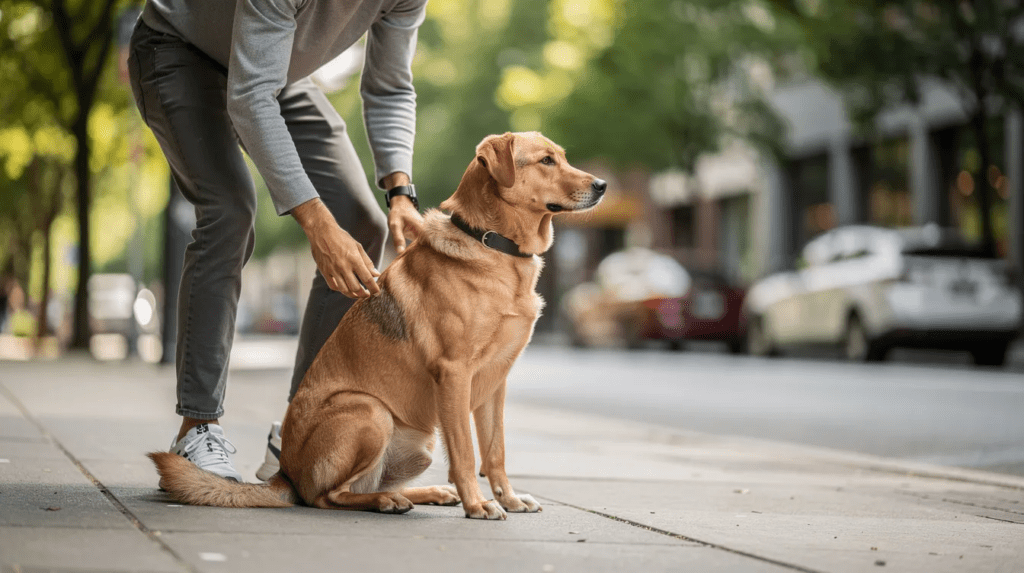
Some behavior problems grow worse over time, especially when dogs are accidentally rewarded for the wrong choices. A dog that pulls on the leash learns that pulling gets them to the park faster. A dog that barks at the door discovers that visitors eventually leave, reinforcing the alarm behavior. Without intervention, these patterns become deeply rooted.
Common issues that often require professional guidance include:
Loose-leash walking is a fundamental skill that helps dogs learn to walk calmly beside their handlers without constant pulling. Effective leash walking techniques often involve clear criteria, consistent practice, and rewarding the dog for staying connected to the handler.
Jumping on people stems from excited greetings that get rewarded with attention. Even negative attention like pushing the dog away can reinforce the behavior in some cases.
Barking at the door functions as a self-rewarding alert. The dog barks, the perceived threat eventually leaves, and the dog believes their barking worked.
Poor recall in open spaces occurs because dogs prioritize high-value distractions like squirrels or other dogs over home-trained cues.
Reactivity describes intense emotional responses like barking, lunging, or freezing toward triggers such as other dogs, strangers, bikes, or skateboards. This often stems from fear or frustration and typically worsens without intervention.
More serious behavior concerns include growling over food or toys, which is called resource guarding, snapping when touched, or aggression toward other dogs or people. These issues should be taken seriously because bite risk can increase when warning signs are ignored or handled incorrectly.
The American Veterinary Society of Animal Behavior supports the use of reward-based methods and cautions against techniques based on fear or pain. Behavior modification techniques often involve positive reinforcement, which encourages desired behaviors by rewarding them rather than punishing unwanted behaviors.
These behavior problems are training and communication issues that often improve faster with professional guidance. Leash manners and reliable recall typically require work around real-life distractions, not just quiet living-room practice.
How Training Builds Better Obedience
Dog obedience means clear, reliable responses to everyday cues such as sit, down, stay, heel, and come. Basic obedience forms the foundation for everything else, from calm walks to polite greetings to off-leash reliability at the park.
Structured training improves communication between dog and owner, helping your dog understand what is expected and how to earn rewards. The Certification Council for Professional Dog Trainers emphasizes the importance of humane, science-based practices in dog training, which are essential for effective obedience training. Key training techniques include clicker training for precise communication, shaping for building complex behaviors, and desensitization to manage fear or reactivity.
Professional programs often progress through what trainers call a distraction ladder:
| Level | Environment | Example |
| 1 | Indoors | Living room with no distractions |
| 2 | Yard | Backyard with mild stimuli |
| 3 | Sidewalks | Neighborhood walks |
| 4 | Parks | Other dogs and people nearby |
| 5 | High-stimulus | Busy trails, outdoor cafes |
A solid recall should be reliable in lower-distraction settings before moving into harder environments. This systematic approach builds better public behavior, including calmly passing other dogs, ignoring dropped food, or settling near activity.
Board and train programs typically involve a dog staying with a trainer for a structured training period. These programs are designed to provide focused practice in a controlled environment, often with follow-up guidance so owners can maintain the training at home.
Positive reinforcement is a widely used technique in dog obedience training, allowing dogs to learn desired behaviors while maintaining their unique personalities. Obedience training can significantly improve the relationship between a dog and its owner, fostering better communication and understanding.
Why Owner Involvement Still Matters
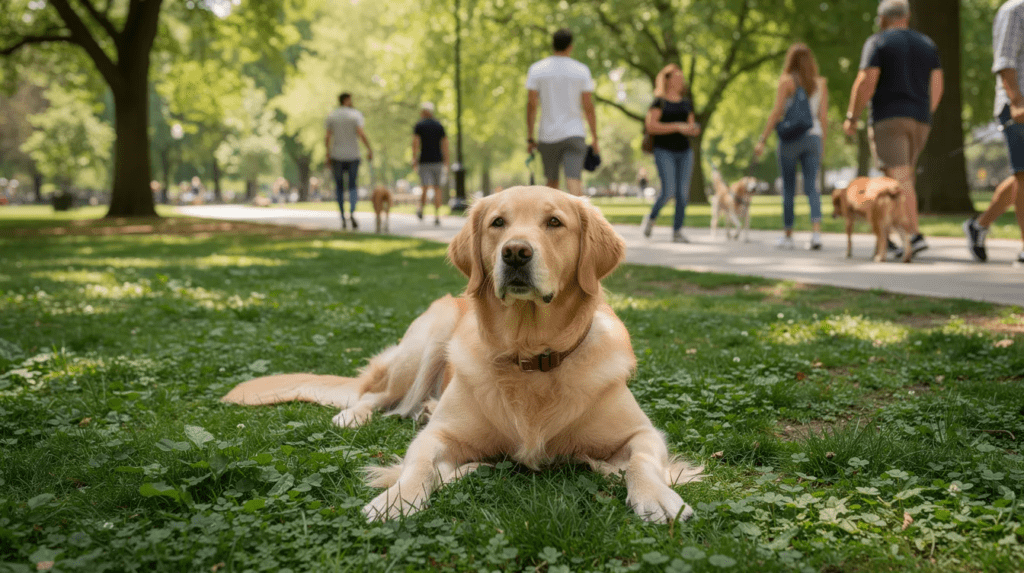
Even with a certified dog trainer guiding the process, long-term results depend on owner involvement and consistent training at home. Dogs build habits with the people they see every day, not just the person who taught them initially. Professional training should also help strengthen communication between the owner and dog. The trainer’s role is not only to teach the dog, but also to coach the owner on timing, consistency, and follow-through.
Owners need to learn the same commands, timing, and handling skills used in training sessions. Training sessions should be kept short, around 10 to 15 minutes, and must be consistent in terms of commands and rewards to prevent confusion for the dog. Simple routines make a difference:
- Practice five to ten minute daily sessions
- Use the same cue words consistently
- Reward calm behavior in real-life moments
- Maintain patience when progress feels slow
Effective behavior modification requires consistency and patience from the owner, as changes in a dog’s behavior can take time to establish and reinforce. Follow-through matters enormously. Allowing jumping just this once or ignoring a recall cue when your dog is distracted can undo weeks of progress. Research on learning theory shows that intermittent reinforcement actually strengthens unwanted behaviors more than consistent reinforcement does.
Professional guidance helps owners stay consistent, make adjustments when progress stalls, and stay motivated through behavior setbacks. Without owner commitment, even good professional training can fade over time. Dogs need consistent reinforcement at home so the new skills become part of daily life.
Final Thoughts
Professional dog trainers can be especially helpful for behavior problems, leash manners, recall, reactivity, and public behavior concerns that have not improved with home practice alone. A good trainer will assess your dog’s specific needs, create a structured plan, and teach you the skills to continue that work at home.
Early support often prevents small issues from becoming long-term habits. The longer a dog practices pulling, barking, lunging, or ignoring commands, the more familiar those patterns become. Getting help sooner can make training safer, clearer, and less frustrating for both owner and dog.
If you feel stressed, worried about safety, or unsure how to handle aggression or severe reactivity, reaching out to a qualified trainer for guidance is a helpful next step. Getting support before behavior problems become harder to manage can make the difference between frustration and a calm, enjoyable life with your dog.

FAQ
The following questions address common concerns not fully covered above. Each answer focuses on practical guidance about when to seek help and what to expect from professional training.
How old should my dog be before working with a professional trainer?
Puppies can start structured training as early as 8 to 10 weeks with gentle, age-appropriate sessions. Early socialization is important because puppies are learning how to interact with people, dogs, sounds, handling, and new environments. Puppy classes may begin early when health and vaccination precautions are followed. Adult dogs and seniors can also benefit from training, and there is no upper age limit for improving obedience and behavior problems.
How long does it usually take to see improvement in behavior problems?
Some simple obedience issues, like leash manners or sitting at the door, may show progress within a few weeks of daily practice. More serious problems like aggression or severe reactivity often require longer guided work and ongoing management.
What should I look for when choosing a professional dog trainer?
The dog training industry is largely unregulated, making it essential for owners to verify that a trainer is qualified and humane. Look for credentials from organizations such as the Certification Council for Professional Dog Trainers or the International Association of Animal Behavior Consultants. CCPDT certifications indicate that a trainer has met experience and exam requirements.
Factors to consider include experience with similar behavior cases, transparency about methods, the ability to tailor training to individual dogs, and patience with both the dog and the owner. A certified dog trainer committed to force free training and continuing education units demonstrates dedication to the dog training profession. Red flags include guarantees of instant cures, methods based mainly on fear or intimidation, lack of transparency, or a trainer who cannot explain how they will keep your dog safe during training.
Can professional training help if my dog behaves well at home but poorly in public?
This is a common situation. Many dogs learn skills in low-distraction environments but struggle to generalize those behaviors to busier places. Training a dog to walk on a loose leash can improve the overall walking experience, making walks more enjoyable and less stressful for both dog and owner.
A trainer can design step-by-step sessions that start in low-distraction areas and gradually build to busier places like sidewalks, parks, and pet-friendly shops. This systematic approach to handling distractions is what separates professional dog training from basic home practice.
Do I need special equipment before starting with a professional trainer?
Having a well-fitted collar or harness, a standard 4 to 6 foot leash, and small, soft training treats that your dog finds motivating is a good starting point. Many dog training professionals will suggest specific tools based on your dog’s size, strength, and behavior.
If behavior issues are becoming harder to manage, contact Off Leash K9 Training of Hampton Roads for expert guidance and a personalized training plan. Schedule your consultation and start building better obedience, safer handling, and calmer everyday behavior with your dog.