Introduction
Puppy fear periods are normal developmental stages when your pup becomes suddenly cautious or scared of people, unfamiliar objects, or everyday experiences. Puppies usually go through two main fear periods as they grow: the first at 8–11 weeks and the second between 6–14 months. These windows of heightened sensitivity are a normal part of how the dog’s brain matures, not a sign that something is wrong with your puppy or your training.
This guide covers how to recognize fear period signs, manage your puppy’s environment, apply proper training techniques, and know when to seek professional help. It’s written for new puppy owners and families in the Hampton Roads region, where coastal storms, military base activity, port traffic, and busy neighborhoods expose young dogs to stimuli that can intensify fear responses during these developmental windows.
Fear periods are temporary developmental phases lasting 2–3 weeks if handled well. During these windows, puppies become more cautious and fearful as their brains develop the neural circuitry to distinguish safe from dangerous stimuli. Understanding fear periods is crucial for effective puppy training.
By the end of this guide, you will be able to:
- Identify when your puppy is entering a fear period based on specific behavioral and physical signs
- Apply positive reinforcement techniques that help your puppy overcome fear triggers
- Avoid the mistakes that can turn temporary puppy fear into lasting anxiety
- Recognize when fear responses require professional training or veterinary evaluation
- Build long-term confidence that carries through your dog’s life
Understanding Puppy Fear Periods
Fear periods happen when a puppy’s limbic system and HPA axis (the brain structures responsible for threat assessment) reach new stages of maturation. Before these periods, puppies show little caution around new stimuli. Once the fear circuitry activates, the pup begins sorting the world into “safe” and “potentially dangerous” categories. This is normal dog development; it’s how wild canids learned to survive, and domestic puppies retain the same neurological timeline.
For dog owners raising a new puppy, these periods determine whether the adult dog will be confident and comfortable in varied environments or anxious and reactive in everyday situations. The two fear periods are the moments when your response as a pet parent can make all the difference.
The First Fear Period (8–11 Weeks)
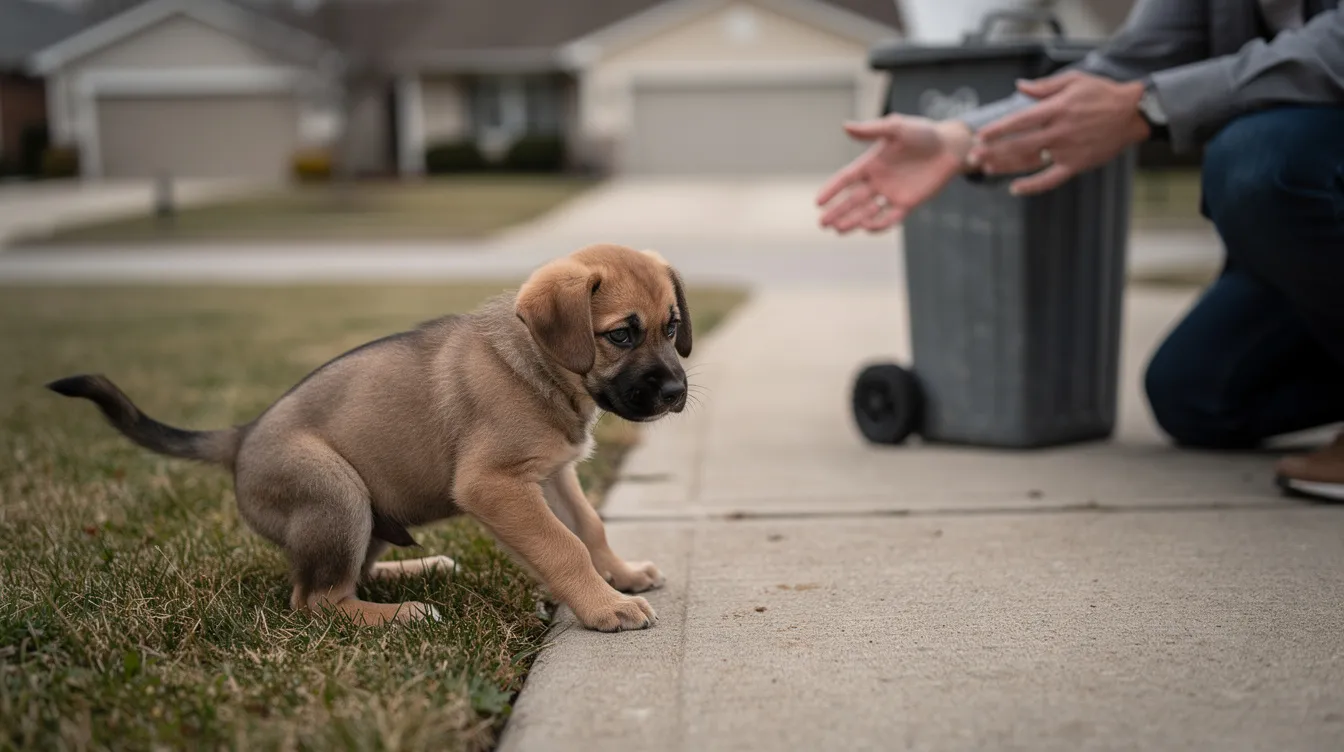
Puppies experience their first fear period at 8–11 weeks, which overlaps with the most common adoption age. A pup that happily explored everything at six weeks may suddenly freeze, retreat, or cower when encountering the same type of stimulus at nine weeks. This shift can seem to happen seemingly overnight, but it reflects the activation of avoidance circuits in the dog’s brain that were dormant just days earlier.
This period falls within the broader critical socialization window of approximately 3–14 weeks. The overlap creates a tension that every pet parent must manage: the puppy needs positive experiences with diverse stimuli to prevent long-term neophobia, but the puppy is also more vulnerable to being overwhelmed. Pushing too hard during this window risks creating a lasting fear imprint. Holding back entirely risks inadequate socialization. The answer lies in controlled, gentle exposure at the puppy’s own pace.
The Second Fear Period (6–14 Months)
The second fear period occurs between 6–14 months of age, during adolescence. Your adolescent dog may look physically mature, but emotional development is still underway. Hormonal shifts, increased environmental awareness, and greater physical strength combine to produce fear reactions that are more intense than those of the first period. An 80-pound German Shepherd lunging away from a trash can creates a different management challenge than an 8-pound puppy doing the same.
Small breed dogs may experience their second fear period earlier than large breeds. Larger breeds may experience their second fear period as late as 14–17 months. A study of 98 purebred puppies across German Shepherds, Yorkshire Terriers, and Cavalier King Charles Spaniels found that breed-dependent differences influenced the onset and expression of avoidance behavior, with smaller breeds showing earlier onset in some tests. Not all dogs follow the same timeline; guarding instincts, breed history, and individual temperament all shape when and how fear periods occur.
The risk during this second window is that avoidance behaviors become entrenched. A puppy that learns to lunge and bark at other dogs during this period may carry that leash reactivity into adulthood if the behavior goes unaddressed.
Recognizing Fear Period Signs and Behaviors
Because fear periods occur as the dog’s brain reaches specific developmental thresholds, the behavioral shifts tend to appear abruptly. A puppy that walked confidently past the neighbor’s lawnmower last Tuesday may refuse to leave the front porch this Tuesday. Recognizing these changes for what they are prevents the common mistake of labeling the puppy as “stubborn” or “defiant.”
Physical Fear Responses
Fearful body language in puppies is measurable and consistent. Research involving 25 puppies aged 2–6 months tested with nonsocial novel stimuli found that lowered posture, tucked tail, freezing, flinching, and retreating were the most reliable indicators of a fearful state. Puppies may show signs of cowering or freezing during fear periods. Trembling and avoiding eye contact are also consistent with fear, though they vary in intensity between individuals. Barking can appear as part of the fear response rather than as aggression.
Reactivity can manifest as excessive barking or growling, which many dog owners misread as dominance or defiance. Body language tells you what the puppy is actually feeling: a stiff posture with weight shifted backward, ears pinned flat, and a low or tucked tail signals fear, not confidence.
Behavioral Changes
Puppies may become scared of previously tolerated objects or sounds. Training that worked reliably a week ago may fail. Your pup might refuse to enter a room, pull away from a familiar walking route, or hide behind your legs when a friend visits. During a fear period, puppies may react with extreme caution or fear to stimuli they previously ignored.
Puppies may exhibit clinginess or severe separation anxiety during fear periods. They may also react to ordinary sounds like passing cars differently during fear periods. These shifts typically resolve within 2–3 weeks if managed properly, but they can become permanent if the puppy experiences a traumatic event during this window or if the fear is punished.
Common Fear Triggers
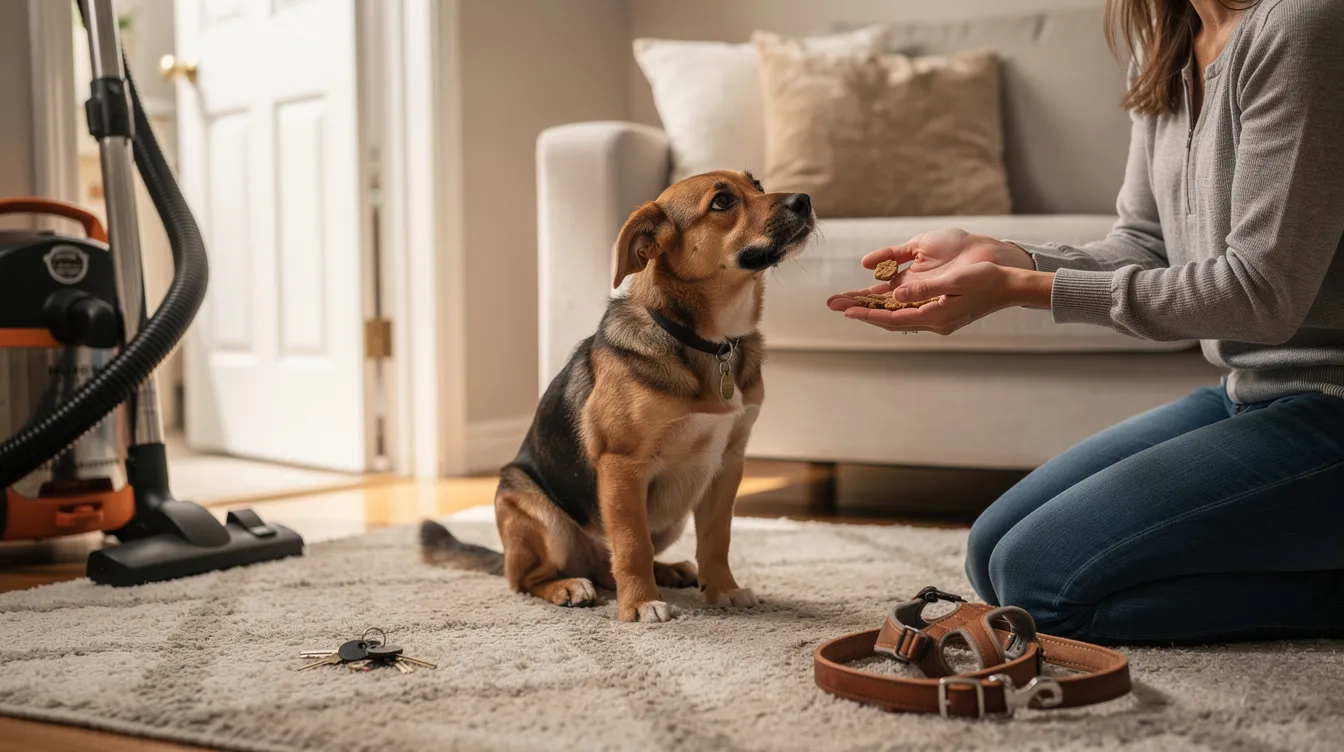
Common triggers include new objects like vacuum cleaners, umbrellas, and the trash can; unfamiliar people; new environments; loud or sudden noises; and other dogs. In Hampton Roads, specific triggers include thunderstorms, military aircraft, construction noise near expanding port facilities, and crowded outdoor events.
Individual variation in fear responses is high. What terrifies one puppy may not register with another. Breed, prior exposure, age, and even the specific day within the fear period all affect sensitivity. Most puppies share sensitivity to unpredictable, noisy, or moving unfamiliar objects. New socializations should be paused if a fear period hits, and exposure should shift to maintenance of existing comfort levels rather than introduction of entirely new stimuli.
Managing Fear Periods Through Positive Training
Knowing how to read fear signs is only useful if you have a clear plan for responding. Positive reinforcement is the approach supported by behavioral research: a 2026 review in Frontiers in Veterinary Science confirmed that reward-based training produces lower stress markers, fewer fear responses, and equal or better learning rates compared to methods using positive punishment or aversive devices. Fearful behavior should not be punished as it can escalate fear. E-collars and other aversive tools during a fear period risk creating permanent negative associations.
Proper Support Techniques
Stay calm and remain calm. Puppies read their owner’s emotional state. If you tense up, gasp, or rush to comfort your puppy with frantic energy, the puppy learns that the scary thing is indeed dangerous. Staying calm during a puppy’s fear period helps them feel safe.
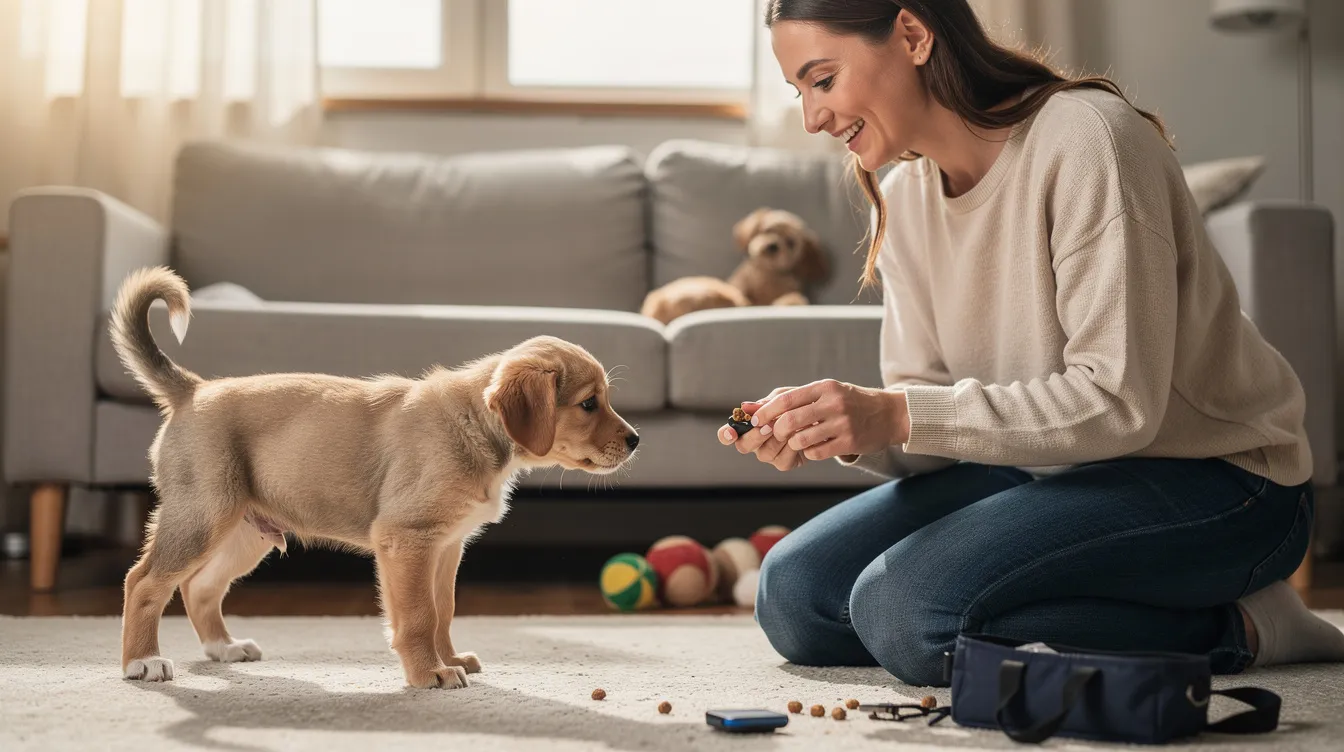
Allow retreat. Give your puppy time and space to observe from a comfortable distance. Creating distance from the scare trigger can be beneficial. Do not force puppies to confront their fears during training. If your pup backs away from a new stimulus, let them. Praise and reward puppies for showing curiosity towards scary objects, even if that curiosity is just a glance from ten feet away.
Reward brave behavior at any scale. A single step toward the stimulus, a relaxed ear position, or a sniff in the direction of the trigger all count. Use high-value treats to build positive associations between the feared stimulus and good outcomes. Over repeated short sessions, the puppy learns that the world is not as threatening as it first appeared.
Use gradual, controlled exposure. Desensitization and counterconditioning pair low-intensity versions of the feared stimulus with positive outcomes. A randomized controlled trial of 45 puppies aged 12–15 weeks found that those exposed to dog-appeasing pheromones during puppy classes showed measurably lower fear scores, with improved socialization measured at follow-ups through 12 months.
Provide safe spaces. A crate, a quiet room, or a familiar bed gives the pup a place to retreat and regulate. Managing a puppy’s environment can prevent traumatic experiences. This is not avoidance; it’s giving your puppy the ability to recover before the next exposure.
Training Comparison: Fear Period vs. Normal Socialization
| Aspect | During Fear Periods | Normal Training |
|---|---|---|
| Session Length | Keep training sessions short: 5–10 minutes | 15–20 minutes |
| Exposure Method | Distance-based, gradual approach at the puppy’s own pace | Direct, confident introduction to new stimuli |
| Response to Avoidance | Allow retreat, praise calm observation | Encourage closer investigation |
| Reward Frequency | Continuous reinforcement for any calm or curious behavior | Variable reinforcement schedule |
| Goal | Maintain existing confidence, prevent fear imprints | Expand comfort zone with positive experiences |
During fear periods, every training decision should prioritize preventing negative experiences over advancing skills. Most dogs recover from a fear period within 2–3 weeks when owners keep training sessions short and fun, maintain consistent routines, and resist the urge to push past the puppy’s comfort threshold.
Common Challenges and Solutions
Hampton Roads puppy owners face region-specific challenges: sudden summer storms, jet noise from nearby military installations, and crowded beach boardwalks all introduce stimuli that can intensify a fear period. Below are the three most common problems and their solutions.
Forcing Interactions During Fear Periods
Dragging a fearful puppy toward the object of their fear does not teach bravery. It teaches the puppy that you will not protect them. This process, called flooding, risks sensitizing the puppy to the trigger and producing a fear response that persists long after the fear period ends. Instead, work at distance. If your puppy is afraid of a specific sound, play a recorded version at low volume while offering treats. Increase volume only when the puppy shows relaxed body language at the current level. Let the puppy set the pace; the puppy learns faster when they choose to approach rather than being forced.
Inconsistent Family Responses
When one family member stays calm and offers treats while another scolds the puppy for cowering, the mixed signals delay recovery. Fear periods require a household protocol: every person who interacts with the puppy uses the same calm tone, the same reward system, and the same rule of never punishing fearful behavior. Write the protocol down. Post it on the refrigerator. Brief visitors before they enter your home. Consistency across all interactions is what allows the puppy to build trust.
Prolonged or Severe Fear Responses
Both fear periods generally last between 2–3 weeks. If your puppy’s fear persists beyond 3–4 weeks, interferes with eating or sleeping, generalizes across many stimuli, or includes aggression, you are likely dealing with something beyond a normal stage of puppy development. Some fear responses have physiological roots; a veterinary exam can rule out pain or sensory issues. For behavioral concerns, contact Off Leash K9 Training of Hampton Roads for a professional evaluation. Many dogs benefit from structured programs that address anxiety before it becomes a fixed behavioral pattern, and early intervention for fearful dogs produces better outcomes than waiting to see if the problem resolves on its own.
Conclusion and Next Steps
Puppy fear periods are a normal part of puppy development, not a sign of a broken dog or failed training. Most puppies experience two fear periods; both are temporary. Your job as a pet parent is to give your puppy space, patience, positive reinforcement, and controlled exposure. Fear periods are not emergencies. They are opportunities to teach your pup that the world is safe, that you are trustworthy, and that new stimuli predict good things rather than bad ones. A puppy that moves through these periods with proper support becomes a happy dog and a confident dog later in life.
Your immediate next steps:
- Observe your puppy’s current behavior. Note any new avoidance, changes in body language, or reactions to previously accepted stimuli. A simple daily log helps you track onset and resolution.
- Align your household. Brief every family member and regular visitor on fear period protocols: remain calm, reward curiosity, never punish fear.
- Adjust your training approach. If your puppy is in a fear period, shorten sessions, reduce exposure intensity, and increase reward frequency.
- Schedule a consultation. If you are unsure whether your puppy’s behavior is a normal fear period or something more persistent, Off Leash K9 Training of Hampton Roads offers professional puppy training programs designed to help your puppy build lasting confidence.
For related topics, explore puppy socialization techniques, addressing common behavioral issues, and separation anxiety management for animals that show fear-related behaviors beyond the typical fear period timeline.