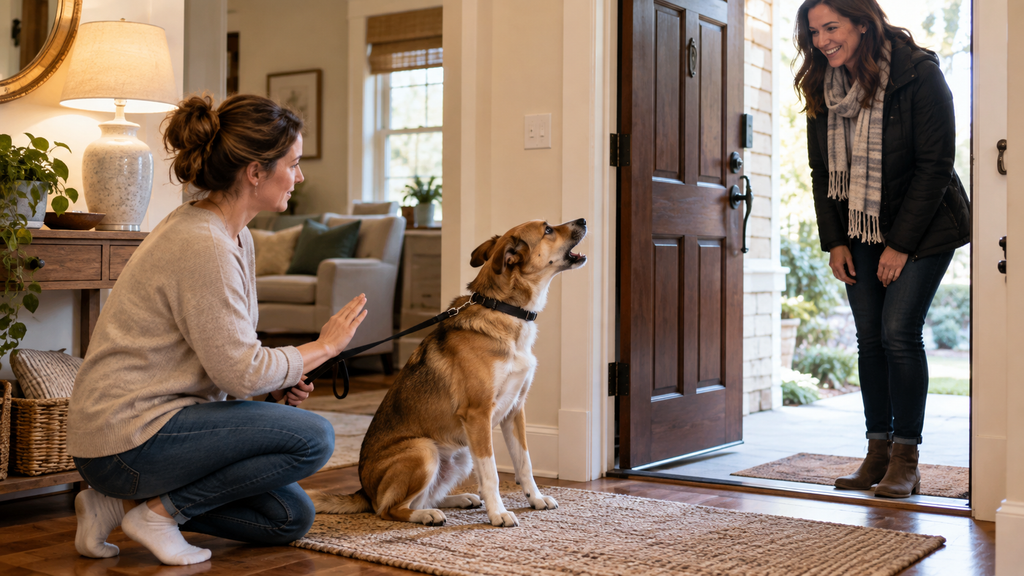
The doorbell rings, and suddenly your living room sounds like a stadium. If your dog barks at visitors, you are far from alone. It is one of the most common behavior concerns dog owners face, and it can make hosting stressful for everyone.
The good news is that dog barking at guests is a learned habit that you can work on. With a plan, a little patience, and consistent practice, you can help your dog learn calmer greetings.
Why Your Dog Barks at Visitors
Barking is communication. The key is figuring out what your dog is trying to say.
Territorial Behavior
Dogs are naturally protective of their home. A knock or doorbell can feel like a signal that someone is approaching their space, so barking becomes a way to sound the alarm.
Excitement
Some dogs love company and can’t contain themselves. The barking, jumping, and spinning often come from pure enthusiasm.
Fear or Uncertainty
Strangers can be unsettling for some dogs. Barking may be a way to create distance when they feel unsure.
Lack of Impulse Control
Even friendly dogs can struggle to stay calm when the moment feels big. Without practice at waiting and settling, excitement takes over quickly.
Common Triggers
Certain moments tend to set off barking:
- The doorbell or knocking
- Footsteps on the porch
- Seeing guests through a window
- Visitors entering quickly or loudly
- Guests who reach for or talk excitedly to the dog
- Unclear routines when company arrives
Noticing your dog’s pattern helps you plan around it.
Start With Management
Training works better when your dog isn’t repeatedly practicing the barking. Set up the environment so success is easier.
- Keep your dog away from the front door when guests arrive
- Use a baby gate, pen, or separate room at first
- Cover or limit window views if watching outside fuels barking
- Put a note on the door asking guests to text or knock softly
- Offer a chew or food toy to keep your dog busy
Management isn’t a long-term fix, but it gives you space to teach better habits without chaos.
Teach Place for Calmer Greetings
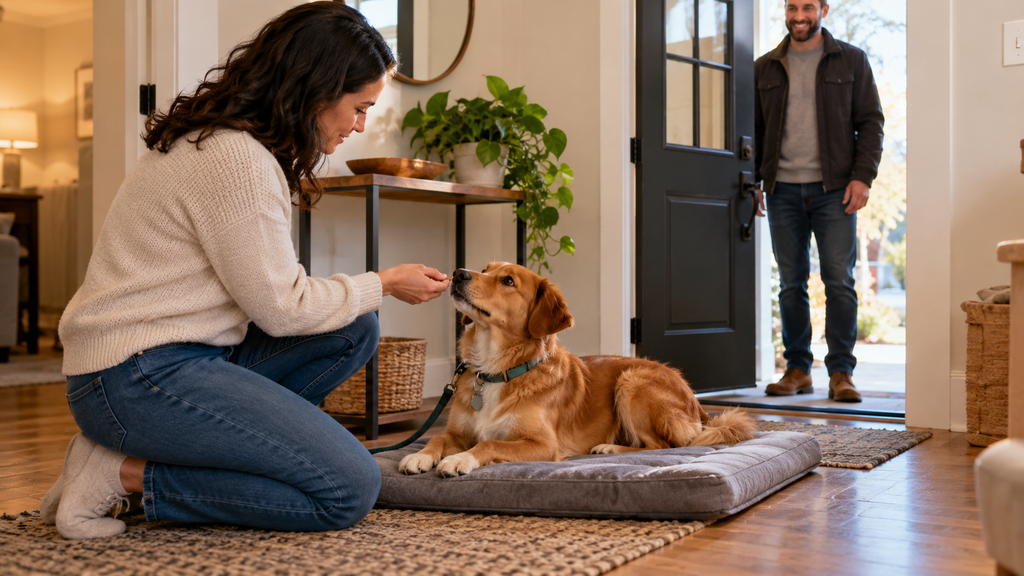
Place gives your dog a clear job when visitors arrive: go to a mat or bed and stay there. Dogs find it easier to be calm when they know exactly what to do.
How to Teach Place
- Choose a mat or bed and keep it in a consistent spot.
- Lure or guide your dog onto it and reward right away.
- Add the cue “Place” as your dog steps onto the mat.
- Reward your dog for lying down and staying calm.
- Gradually build time, distance, and mild distractions.
- Release your dog with a clear word like “okay.”
Connect Place to the Doorbell
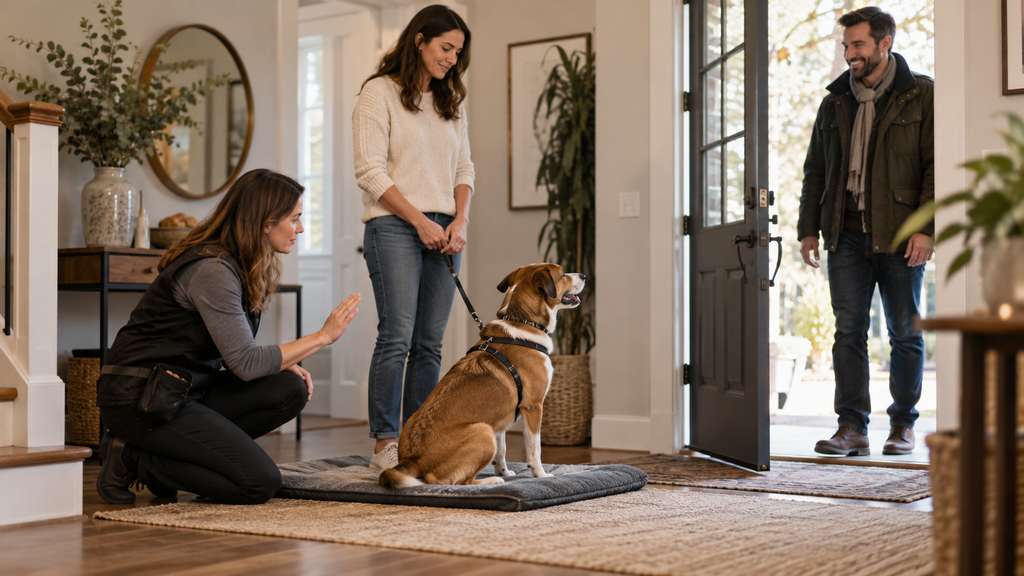
Once your dog understands Place, practice with real door cues. Ring the bell, send your dog to Place, and reward calm behavior. Start at a low level, then slowly add knocking, opening the door, and a helper stepping inside.
Reward Calm Behavior and Build Impulse Control
Dogs repeat what works. Catch the behavior you want and pay for it.
- Reward quiet moments before the doorbell, not only after the barking
- Give treats at the mat while guests settle
- Practice sit-stays and wait-at-the-door exercises
- Release your dog to greet only when he is calm
Impulse control exercises like “wait” and “leave it” help your dog learn that calm behavior opens the door to good things.
Make Visitor Manners a Team Effort
Your guests are part of the plan. Ask them to:
- Ignore the dog until he is calm
- Avoid direct eye contact or fast movements at first
- Skip excited greetings and high-pitched voices
- Follow your lead on when and how to interact
A calm room makes calm behavior easier. If you have a regular helper, practice short visits before inviting a larger group.
Common Mistakes to Avoid
- Yelling over the barking: Your dog may hear it as joining in.
- Punishing the dog: This can increase stress and make visitors feel more worried.
- Letting greetings be a free-for-all: Unclear rules make calm harder.
- Inviting a crowd too soon: Start small and build up.
- Inconsistency: If the rules change by day or person, progress slows.
- Skipping exercise and enrichment: A dog with pent-up energy has less self-control.
When Professional Training May Help
Consider a professional if barking is hard to manage, shows up with growling, snapping, or lunging, or your dog never relaxes around guests. Fear-based barking and strong guarding behavior often benefit from personalized guidance. A trainer can read your dog’s body language, tailor a plan, and coach you and your visitors through practice. Dog obedience training can also strengthen the real-life manners that make greetings smoother.
Frequently Asked Questions
Why does my dog bark at visitors but not at me?
Dogs often treat family differently from newcomers. Strangers can trigger territorial, excited, or uncertain barking. Training helps your dog learn what to do when someone new arrives.
Should I ignore my dog when he barks at guests?
Ignoring alone may not be enough, especially if barking is self-rewarding. Redirect your dog to Place and reward calm behavior. This gives your dog something clear to do instead.
Is it okay to use a crate or gate when guests arrive?
Yes, especially while your dog is learning. Management prevents rehearsing the barking and helps everyone stay calm. Pair it with training so your dog gradually earns more freedom.
How long will it take to see improvement?
Every dog is different, and progress depends on the dog’s history, consistency, and practice. Short, regular sessions tend to work better than occasional long ones. A trainer can help set realistic goals.
Final Thoughts
If your dog barks at visitors, remember that it’s a behavior you can shape with the right approach. Manage the setup, teach Place, reward calm choices, and keep your rules consistent. If barking around guests still feels hard to manage, consider working with a professional dog trainer who can support you and your dog with practical, real-life obedience.