Key Takeaways
- Most older dogs need about three weeks to start relaxing around a new puppy and up to 3 months to fully settle into a new routine together.
- Careful, gradual introductions and constant supervision in the first 7–14 days significantly lower the risk of fights and stress between dogs.
- Using tools like crates, baby gates, and exercise pens provides necessary breaks and reduces stress for both the current dog and new puppy.
- Rewarding calm, friendly behavior from both dogs speeds up adjustment and reduces jealousy and resource guarding.
- Patience, routine, and observing each dog’s body language are the keys to building a peaceful two-dog home.
Why Helping Your Dog Adjust to a New Puppy Matters
Bringing an 8–10 week old puppy into a home with an older dog means big changes. Your current dog has had all your attention, toys, and food. Now, a new pup will share everything.
The adjustment follows the “Rule of 3s”: 3 days, 3 weeks, and 3 months. Both dogs need this time to get comfortable in their new situation.
Many owners expect their dog to accept the new puppy right away. This often leads to disappointment and conflicts. Without careful introductions, fights and stress can happen in up to 40% of cases.
But most dogs can live peacefully with a new sibling if you guide them properly. This guide shows you how to spot problems, introduce dogs step-by-step, handle jealousy, use positive reinforcement, and build a solid routine.
Signs Your Older Dog Is Struggling With the New Puppy
Subtle stress signals often appear in the first 48–72 hours after the new puppy comes home. Recognizing these early helps you adjust your approach before problems escalate.
Emotional signs to watch for:
- Avoiding common areas or hiding in bedrooms
- Refusing to interact with family members
- Sudden clinginess with one person
- Increased attention-seeking behavior
- Seeming withdrawn or uninterested in normal activities
Physical and behavior changes:
- Loss of appetite or refusing to eat
- Pacing, panting indoors, or restless sleep
- House accidents from a previously house trained dog
- New barking, whining, or vocalizing
- Excessive yawning or lip-licking
Social warning signs toward the puppy:
- Stiff body posture and hard staring
- Growling when the puppy approaches beds, toys, or people
- Air-snapping or blocking doorways
- Turning away repeatedly or freezing in place
During the first few days in a new home, dogs may exhibit shutdown behavior or caution, and it can take several days to weeks for them to feel comfortable and settled, depending on their temperament and history.
What’s considered normal? Brief growls to set boundaries are healthy communication. Red-flag behavior includes repeated lunging, pinning the puppy down, or ignoring the puppy’s yelps and distress signals. If stress signs last more than 7–10 days or escalate in intensity, slow things down and consider professional guidance.
Preparing Your Home Before the New Puppy Arrives
Setting up 3–7 days before the puppy arrives eases the transition for your current dog and creates a harmonious dog home.
Create separate safe zones:
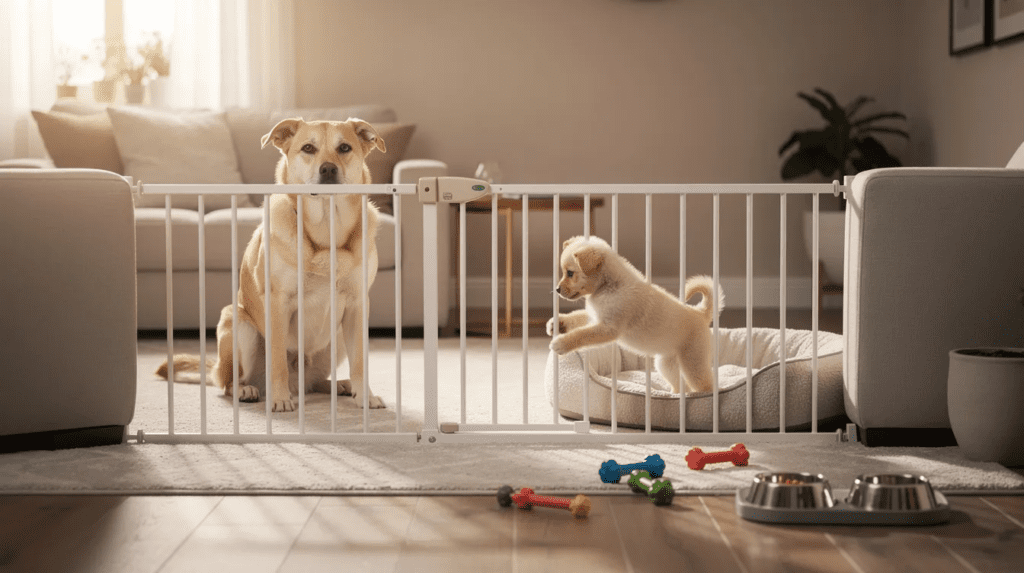
Use baby gates to give each dog their own space with beds, water, and toys. This prevents early conflicts and gives both dogs a secure area.
Essential tools:
- Crates sized for each dog
- Baby gates for visual but no physical contact
- Exercise pens for supervised separation
- Long leashes (15–20 feet) for indoor control
Prevent resource guarding:
Feed dogs separately, at least 10–20 feet apart, and remove high-value toys or chews before the puppy is brought home to avoid guarding behaviors.
Build positive associations:
Offer high-value treats and puzzle toys to your older dog only when the puppy is nearby, linking the puppy’s presence to good experiences.
Set clear house rules early, such as couch or bedroom access, to reduce confusion and rivalry.
Step-by-Step: Introducing Your Dog to a New Puppy
Gradual introductions over the first week build trust and reduce stress.
Meet on neutral ground:
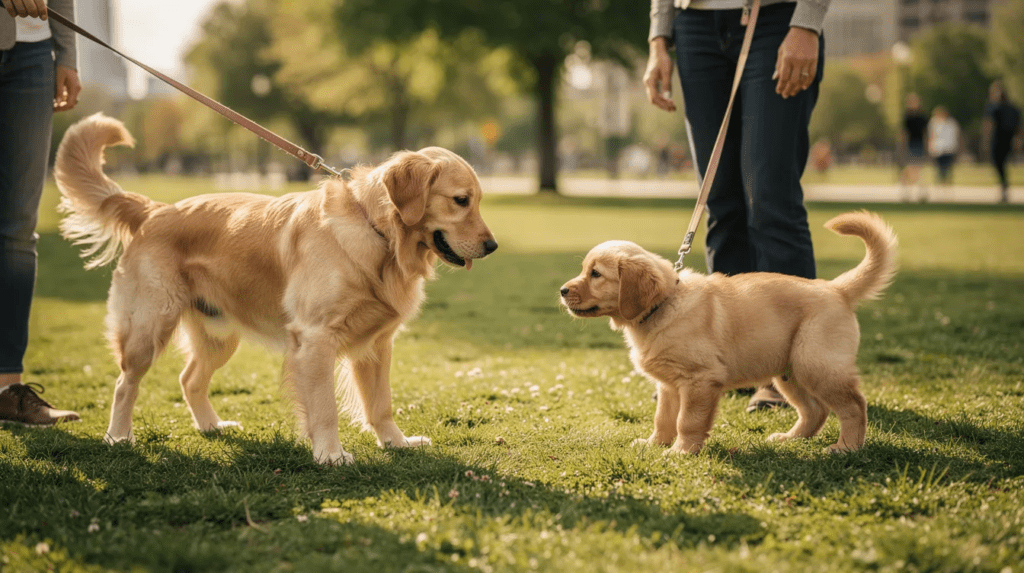
Introduce dogs outside the new dog home, such as a quiet yard or park, to prevent territorial behavior. Both dogs should be on loose leashes with two adults supervising.
Observe body language:
Look for relaxed postures and play bows; avoid stiff stances, staring, or whale-eye. Use parallel walking several feet apart for smoother introductions.
Keep first meetings brief:
Limit initial interactions to 3–5 minutes, allowing sniffing at their own pace and ending before stress appears.
Enter home carefully:
Bring the older dog in first, then the puppy, separated by gates indoors for initial contact.
Repeat short, supervised sessions over 2–3 days rather than long playtimes.
Supervise Interactions Closely
No unsupervised contact during the first 1–2 weeks, especially with size differences.
Handler roles:
- One monitors the older dog’s comfort
- The other manages the puppy’s behavior
Use long leashes indoors to gently separate dogs if needed.
Rotate free time to give each dog breaks and prevent exhaustion or frustration.
Adult dogs need 16–18 hours of sleep daily; a hyper puppy can disrupt this, so structured routines with breaks help.
Allow Healthy Dog Communication
Older dogs teach puppies boundaries through growls, snaps, or turning away. These corrections are normal and help puppies learn social rules.
Don’t punish your dog for growling; instead, calmly separate the dogs to give a break.
Danger signs needing separation:
- Aggressive pinning or shaking
- Ignoring puppy distress signals
- Prolonged chasing or attempts to injure
Puppies learn better from controlled dog corrections than repeated human intervention, but when those corrections tip into true aggression, structured aggressive dog training programs can be essential for safety.
Managing Jealousy and Attention Issues
Jealousy is common as your dog adjusts to sharing attention and resources.
Prevent guarding:
Feed separately, pick up high-value items when unsupervised, and avoid shared bowls initially.
Maintain one-on-one time:
Daily solo walks or training sessions with your older dog reduce jealousy and reinforce your bond.
Create positive puppy associations:
Reward calm behavior around the puppy with treats and praise to build goodwill.
Redirect pushy or attention-seeking behavior with simple commands and rewards.
What to Avoid
- Yelling or punishing during tense moments
- Forcing dogs to “work it out” together unsupervised
- Taking sides or showing favoritism
- Punishing growling, which can escalate aggression
When conflicts arise, calmly separate dogs and wait for calm before reintroducing.
Avoid pushing interactions when stress is high to prevent escalation.
Using Positive Reinforcement to Help Dogs Accept a New Sibling
Dogs form emotional associations, and the goal is simple: pair the new puppy’s presence with good things happening for your older dog.
Simple reward rules:
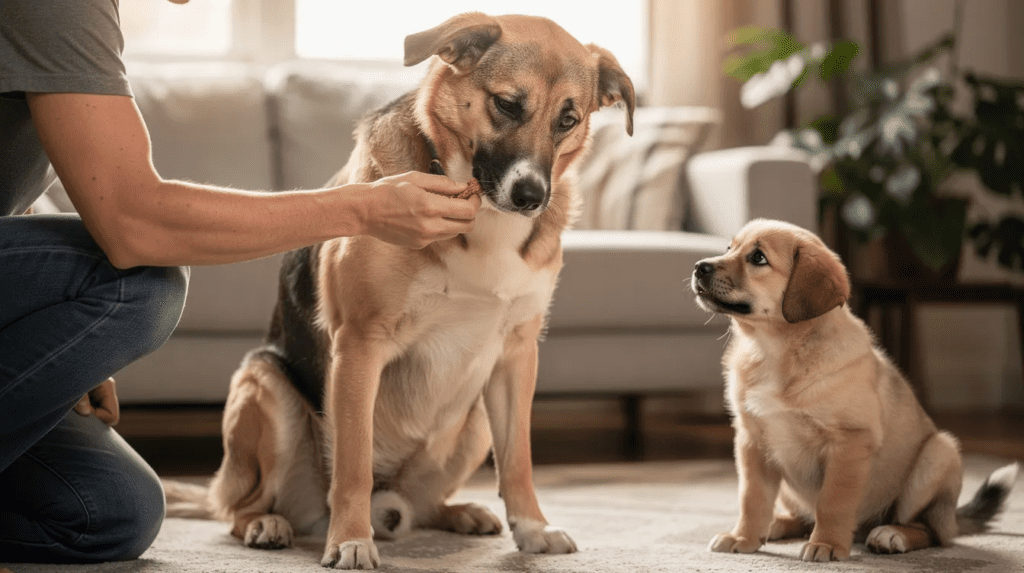
Every time your older dog looks at the puppy calmly, quietly mark the behavior (a click or “yes”) and deliver a treat. This creates a direct connection between “puppy” and “rewards.”
Micro-sessions work best:
Plan 3–5 minute sessions several times per day. Focus on calm behaviors:
- Lying on a mat near the puppy
- Sniffing politely without tension
- Walking away from the puppy voluntarily
- Ignoring puppy antics
The puppy also needs rewards for gentle behavior: sitting instead of jumping, offering a toy instead of mouthing the older dog, or backing off when told.
Use soft praise and small treats so sessions feel easy and fun, not like formal training drills. Consistency matters—all adults in the home should reward the same behaviors with the same approach, and for some families, integrating smart home devices into dog training can make that consistency easier.
Research shows that with proper positive reinforcement protocols, 90% of dogs show significant tolerance improvement by week 3.
Sample Mini Training Games for Two Dogs
Short games teach manners and help create positive associations between the dogs and their people.
“Sit for everything” game:
Both dogs sit before getting leashes on, going outside, or receiving meals. This reduces pushy behavior and establishes calm as the default state.
“Elder first, puppy second” routine:
The older dog gets leashed first, gets food first, and goes through doors first. This reassures your current dog of their place while still being kind to the puppy. Eventually, this becomes automatic.
Turn-taking game:
- Older dog does a cue (sit) and gets a treat
- Puppy does a simple cue (sit) and gets a treat
- Repeat, building calm sharing of owner attention
Keep these games short, upbeat, and free of scolding. Training videos can help you visualize the process, but in person practice is what builds the skills.
Establishing Routines for a Peaceful Two-Dog Home
Predictable routines reduce anxiety and help both dogs understand what happens next each day. Dogs thrive on knowing what to expect, and a well-planned daily routine for a high-energy dog can prevent a lot of tension between siblings.
Sample daily schedule structure:
| Time | Activity |
| 7:00 AM | Older dog potty trip and solo walk |
| 7:30 AM | Puppy potty trip (focus on potty training and common mistakes to avoid) |
| 8:00 AM | Separate feeding in designated spots | | 9:00 AM | Short supervised interaction | | 10:00 AM | Puppy crate nap, older dog free time | | 12:00 PM | Puppy play and training session | | 1:00 PM | Both dogs rest in separate spaces | Stagger potty breaks at first so you can supervise closely on the puppy’s house training without neglecting your older dog’s needs, especially if you’re managing potty training in an apartment or city setting.
Sleep arrangements matter:
Separate sleep setups work best for at least the first month. Crate or pen for the puppy, familiar sleeping spot for your current dog. This prevents night disturbances and gives your older dog uninterrupted rest.
Keep mealtimes consistent and at the same locations each day to decrease food-related tension. As the new dog matures, you can gradually move from strict rotations to more shared time, following the comfort level of both dogs.
Timeline: What Adjustment Often Looks Like Over 3 Months
Understanding typical progress helps set realistic expectations and prevents the puppy blues many owners experience.
First 3 days:
This is a time of shock and excitement. The puppy is learning the layout of new surroundings, and your older dog is assessing the change. Both may seem overwhelmed or overly energetic. It’s important to be patient during the adjustment period, as new dogs may not want to engage in play or cuddling right away, and they will gradually warm up as they feel more secure in their new home.
About three weeks:
Most dogs show more relaxed body language, clearer play invitations, and better understanding of each other’s boundaries. You might hear less growling and see more neutral or curious interactions. The new routine starts feeling familiar.
By 3 months:
Many pairs settle into predictable play patterns, shared resting spots, and more reliable responses to house rules. Your two dogs may not be best friends, but peaceful coexistence is the goal.
Some sensitive dogs, rescues, or very senior dogs may need longer, and fearful rescues in particular may require extra patience and strategies for building trust with a nervous dog. Progress should be measured in small improvements—shorter growling episodes, calmer greetings, relaxed naps in the same room—not perfection.
When to Slow Down or Seek Extra Help
It is not a failure to ask for help when adjusting your dog to a new puppy feels overwhelming. Recognizing when you need support is responsible dog ownership.
Clear warning signs requiring professional intervention:
- Repeated attempts by the older dog to injure the puppy
- Deep puncture wounds (always a vet priority)
- The puppy is becoming chronically shut down and fearful
- Weight loss exceeding 10% of body mass in either dog
Subtle long-term concerns:
- Constant growling around people or resources despite management
- Serious fights over toys, even with supervision
- Either dog loses interest in food or play for extended periods
- Separation anxiety developing in either pet
Consult a veterinarian if your older dog shows ongoing vomiting, diarrhea, or appetite loss after the new puppy arrives. Sometimes physical symptoms mask emotional distress, and other things like thyroid issues can mimic behavioral problems.
Qualified dog behavior professionals can create tailored plans for multi-dog homes, especially where aggression or anxiety is involved. Don’t wait for serious incidents to happen—making changes early prevents problems from becoming entrenched.
Conclusion: Patience, Consistency, and Observation
Dogs don’t become best friends overnight. Follow slow, clear steps to protect your older dog and new puppy.
Key points: introduce them in a neutral space, supervise all interactions, respect dog communication, and use positive reinforcement consistently. Each dog adjusts at their own pace.
Look for daily progress. Maybe growling is shorter today, or they sniff without tension, or nap peacefully in the same room. These small wins count.
With time and calm guidance, many dogs go from stressful beginnings to comfortable two-dog homes. Some become playful companions; others simply coexist peacefully—and that’s fine.
Keep practicing. Stay patient. Reward calm, kind behavior. Your early effort builds a foundation for years of harmony.
FAQ: Helping Your Dog Adjust to a New Puppy
How long does it usually take for an older dog to accept a new puppy?
Most dogs start relaxing around a new puppy in about three weeks and settle into a routine by three months. This follows the “Rule of 3s.” Sensitive or anxious dogs might need more time. Focus on calmer body language and peaceful coexistence rather than play.
Should I let my older dog correct the puppy?
Yes. Controlled growls or snaps without injury teach important boundaries quickly. Puppies lack social skills and need these lessons. Intervene only if the adult dog pins, shakes, or chases the puppy aggressively. Always give the older dog a safe escape.
Is it better to get two puppies at once instead of adding one later?
Two puppies can bond closely but may struggle with training and focus on humans. Many owners find it easier to raise one puppy first, then add another when the first is older and trained. Adult dogs can model good behavior for puppies.
What if my older dog completely ignores the new puppy?
Ignoring is often a healthy way for your dog to cope. Reward calm behavior even if it’s just lying away from the puppy. Not all dogs become playmates; peaceful coexistence is a good goal.
Can an older dog become depressed after a new puppy arrives?
Yes. Signs include sleeping more, withdrawing, losing interest in toys, or being less playful. Boost one-on-one time and keep parts of the old routine. Provide quiet spaces away from the puppy. Contact a vet if symptoms last more than 2–3 weeks or include appetite or weight changes.