If your dog plants themselves at your feet every time you sit down for dinner, you are not alone. A dog begging for food is one of the most common household frustrations owners face. Thankfully, it is also one of the most fixable. This guide covers why dogs beg, what keeps the habit alive, and the practical training steps that help your pup learn calm mealtime manners.
Key Takeaways
- A dog begging for food is a learned habit, not stubbornness or bad behavior. Dogs repeat behaviors that earn rewards, and even one table scrap can start the cycle.
- Begging persists because it has worked in the past and because mealtimes lack clear rules and structure.
- Calm dog obedience (place command, down, stay, recall) during meals is more effective than yelling or punishment.
- Consistency from every family member and guest is essential for long-term success.
- If begging feels out of control or is paired with guarding or aggression, reviewing available training programs and pricing can help you understand which option may fit your dog’s needs.
Why Dog Begging for Food Becomes a Habit
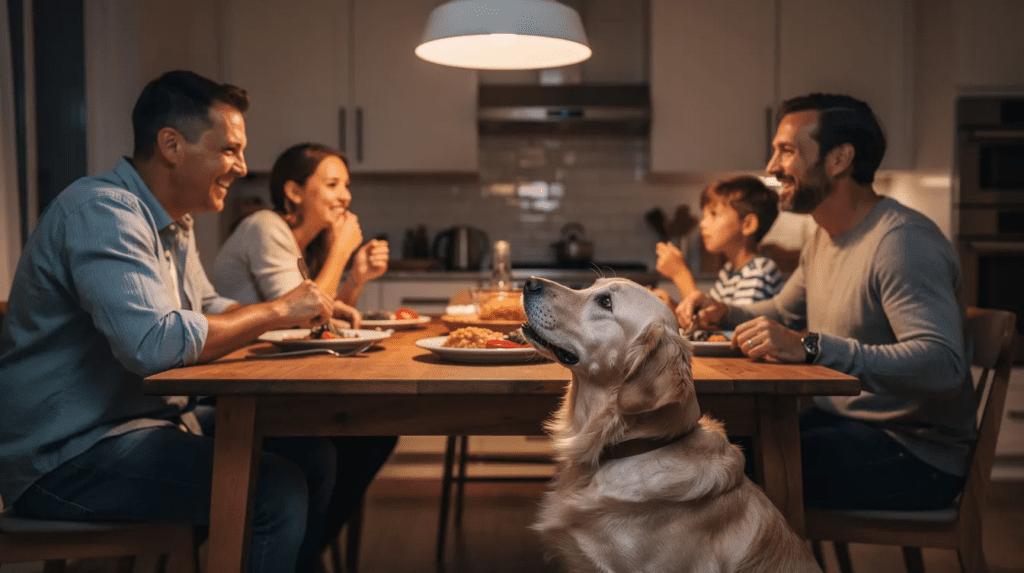
Most dogs beg because the behavior has been unintentionally rewarded over days, months, or even years. Dogs are naturally interested in food smells, dropped crumbs, and anything that might lead to an extra bite. The aroma of cooking or a plate of human food on the table can be a powerful trigger, especially when the dog has learned that mealtime sometimes leads to scraps, attention, or access to food.
Dogs quickly link human eating with the chance of getting extra food. Chairs pulled out, the microwave beeping, plates landing on the table: all of these cues tell a dog that food is nearby. Dogs may even confuse human meal times with their own feeding times if the schedule is unpredictable. Begging behavior can be learned from early interactions with humans, which is why many dogs start the habit in puppyhood. A single dropped piece of chicken or pizza crust is enough to teach a pup to watch the table closely all the time.
Dogs also beg for attention, not just food. Even eye contact or a quick “stop that” can encourage the behavior. Positive reinforcement, whether a bite of food or a moment of attention, encourages dogs to continue begging for food. Dogs learn that persistence works if they receive food after begging, and they repeat behaviors that earn rewards. Over time, even small scraps or occasional bites can become part of the dog’s routine and make begging harder to stop.
Common Mistakes That Make Begging Worse
Well-meaning owners often reinforce begging without realizing it during weeknight dinners, holidays, and parties. Here are the most common mistakes that keep the cycle going:
- Feeding “just one bite.” Giving scraps from your plate, especially tempting foods like turkey, cheese, or bacon, convinces your dog to keep trying. Even one slip from a family member or guest resets progress. Never feed your dog from the table to prevent begging. Establishing a strict rule against feeding dogs from the table is one of the most important steps you can take.
- Inconsistent rules. Allowing snacks from the table when guests visit, but not on regular nights, creates confusion. Dogs do not understand exceptions. Consistency is essential for managing a dog’s begging behavior, and all family members should enforce the same rules regarding begging.
- Giving attention during begging. When you talk to, laugh at, or push your dog away, you may still be giving them what they want: your focus. Children may squeal, hug, or run when a dog begs, which can make the behavior stronger fast. For attention-seeking begging, calm withdrawal of attention works best when paired with a clear alternative, such as a place command, down-stay, or resting behind a gate.
- Punishing instead of teaching. Yelling or scolding does not teach alternative behavior. It can increase anxiety around meals and make begging more frantic. Eliminating the payoff is key to stopping begging behavior, not adding stress.
Be aware that some dogs may briefly beg harder when the old reward disappears. They may whine, bark, paw, or stare more intensely for a short period because the behavior used to work. Stay calm and consistent, but use management if the behavior becomes too disruptive or unsafe. A leash, crate, baby gate, or place command can prevent the dog from practicing begging directly at the table.

How Obedience Helps Stop Table Begging
Calm dog obedience gives your dog a clear job during meals. Instead of wandering the room searching for crumbs, your dog knows exactly where to be and what to do.
- Place command. Teach your dog a “go to place” cue during meals. This means sending your dog to a specific bed or mat a few feet from the table and asking them to lie down and stay there for the entire meal, not just a few seconds. Reinforcing alternative habits like this can help replace begging with calm, settled behavior.
- Down and stay. These commands build impulse control so your dog can remain settled even when people walk past with plates or drop food. Practice in low-distraction settings first, then gradually add real meal situations.
- Recall. A strong recall lets you call your dog away from the kitchen or dining area before they start begging or jumping toward counters. It is a simple way to break the pattern before it begins.
Rewarding calm behavior can help reduce begging over time. Start with short, structured obedience sessions each day, for example, 5 to 10 minutes twice daily, and practice these commands away from mealtimes first. Then gradually introduce real meals as distraction training. Reward the behavior you want, such as holding a down-stay on the mat, instead of only reacting after the dog starts begging.
Building Better Mealtime Manners
A calm, predictable routine is the foundation for good mealtime manners. Here is a simple step-by-step approach:
- Exercise first. A walk or play session before dinner helps your dog burn energy, making it easier to sit or lie quietly while the household eats.
- Feed your dog before you eat. Feeding your dog before the household sits down may help reduce begging because their own meal is already finished, and their routine feels predictable. You can also feed your dog at the same time you eat, especially if they are in a crate, gated area, or in a place with a food puzzle.
- Send to the place or crate. Cue your dog to go to their mat, bed, or crate in a defined space away from the table. Use a baby gate to separate your dog during meals if needed. Baby gates or crates block access during meals and keep your dog in a separate area so they cannot practice begging directly at the table.
- Limit attention during begging. If your dog is safely managed, avoid eye contact, talking, touching, or feeding while they beg. If they bark, paw, jump, or try to steal food, calmly reset them to a place, a crate, or a gated area instead of turning the moment into a struggle. The goal is to remove the payoff while teaching a better mealtime routine.
- Release after cleanup. Wait until everyone has finished eating and the table is cleared before you release your dog. Clean up food crumbs to reduce your dog’s interest in begging after the meal.
Keep your dog occupied with a food-dispensing toy while eating. Providing distractions during meals can alleviate begging behavior effectively. Using long-lasting enrichment toys, like a stuffed food toy or chew puzzle, can keep dogs occupied during meals without rewarding begging at the table. Use interactive toys to keep your dog occupied during meals so they have something productive to focus on in their own space.
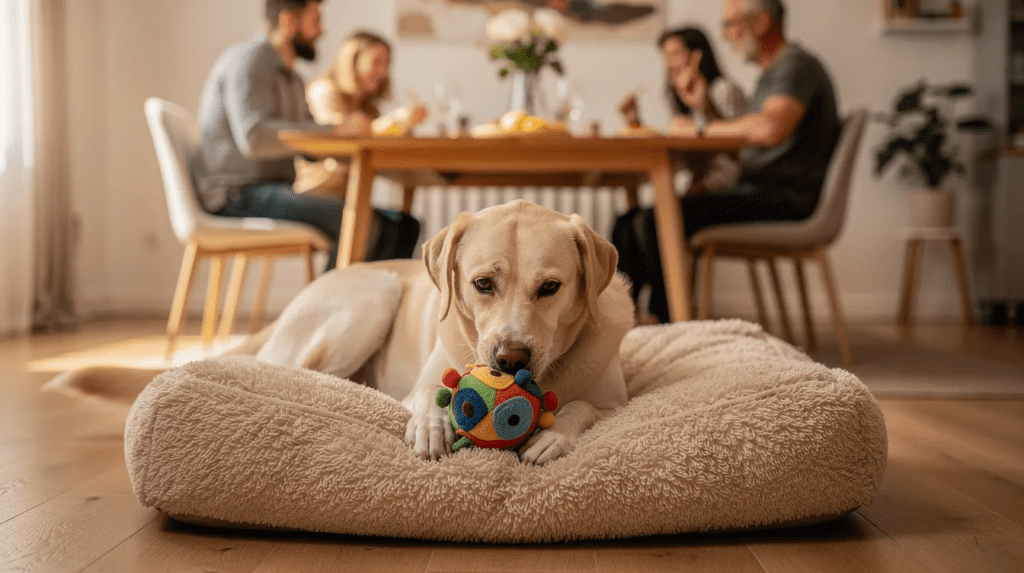
These tips may feel strict at first, but with patience, your dog will learn that mealtimes mean settling quietly in their spot, not hovering by the table. To prevent puppy begging from becoming a lifelong issue, start these habits early. The advice is the same for adult dogs: structure, repetition, and predictable rules lead to better behavior.
Final Thoughts
A dog begging for food is a learned habit, and learned habits can be changed. You do not need to yell, push, or punish. Calm repetition, clear rules, and predictable routines create better long-term behavior for every dog in every household.
Encourage your whole family to agree on shared rules so your dog receives the same message from adults, children, and visitors during every dinner. When the rule is the same for every person, the dog stops trying to find the weak link.
If table begging, jumping, or food stealing continues despite consistent effort, consider seeking professional training. A tailored obedience program can help you build better mealtime manners and create a calmer, more enjoyable home environment.
FAQ
These frequently asked questions cover common concerns that go beyond the main steps above. Each answer is designed for busy households dealing with everyday dog begging challenges.
Is my dog hungry if they are always begging around meals?
Most healthy adult dogs who are fed a balanced diet in appropriate portions are not truly hungry when they beg. They are responding to habit, smell, and learned rewards. Check your dog’s portions against the food label and assess their body condition score. If your pet seems obsessed with food, loses weight, or shows digestive changes, consult a veterinarian to rule out medical causes.
How long does it take to stop a dog from begging once I change the rules?
Some dogs improve quickly once the household stops feeding from the table and practices a consistent mealtime routine. Dogs with a long history of success at begging may take longer to fully settle. Progress looks like less hovering, shorter begging episodes, and a better response to place, down, stay, or recall. Stay consistent, and use management tools like gates, crates, or place command if the habit is strong.
What should I do if guests keep slipping my dog food from the table?
Set expectations before the meal begins. Let guests know you are working on mealtime manners and that any treat for the dog should go into the dog’s bowl after everyone has finished eating. During gatherings, use a crate, gated area, or place command in another room so your dog cannot practice begging directly at the table.
Can I ever share human food with my dog without encouraging begging?
Small amounts of safe human food may be fine for some dogs if given away from the table, placed in the dog’s bowl, and offered after people have finished eating. Avoid high-fat, salty, or toxic foods, and make sure treats or extras fit within your dog’s daily calorie needs and diet plan. When in doubt, confirm safety with your veterinarian before giving your dog anything new.