If your dog starts whining out of nowhere, it can feel confusing and stressful. A sudden increase in dog whining usually signals either physical distress or emotional anxiety, and understanding the difference matters. This guide walks you through the most common reasons behind sudden whining, what to watch for, and how structured training and calm routines can help your dog settle.
Key Takeaways
- Sudden whining often signals a change in your dog’s body or environment, such as pain, stress, fear, excitement, or attention seeking. Observe patterns before reacting with frustration.
- Any sudden behavior change, including excessive whining, can indicate a medical condition. Contact a vet promptly if whining is paired with limping, vomiting, diarrhea, appetite changes, or signs of pain. Seek emergency care right away for collapse, difficulty breathing, seizures, a swollen abdomen, or unproductive retching.
- Dogs whine to communicate needs, and pet parents can accidentally reward whining by giving food, attention, or opening doors the moment the sound starts.
- Yelling or punishment tends to increase a dog’s anxiety and make whining worse. Calm structure, predictable routines, and obedience skills help most dogs relax.
- If whining becomes frequent or disruptive, a veterinarian and a professional trainer can work together to address both health and behavior causes.
Why Is My Dog Whining So Much All of a Sudden?
Why is my dog whining so much all of a sudden? It is a common question pet parents ask when their normally quiet dog begins vocalizing throughout the day or night. Whining can take many forms, from soft, barely audible sounds to persistent, high-pitched cries that disrupt the entire household.
Dogs whine as a normal part of communication with humans. However, a sudden uptick usually means something has shifted. The most common reasons include pain or a new medical condition, separation anxiety, attention seeking, confusion, fear of noises, boredom, or simply needing to go outside more often than usual. Whining can also express excitement when dogs anticipate something enjoyable, like a walk or play session.
The goal is not to simply silence the noise. It is to understand what your dog is trying to say and decide whether the situation is urgent, important, or a training opportunity. Start by calmly observing when, where, and around what events your dog’s whining appears.
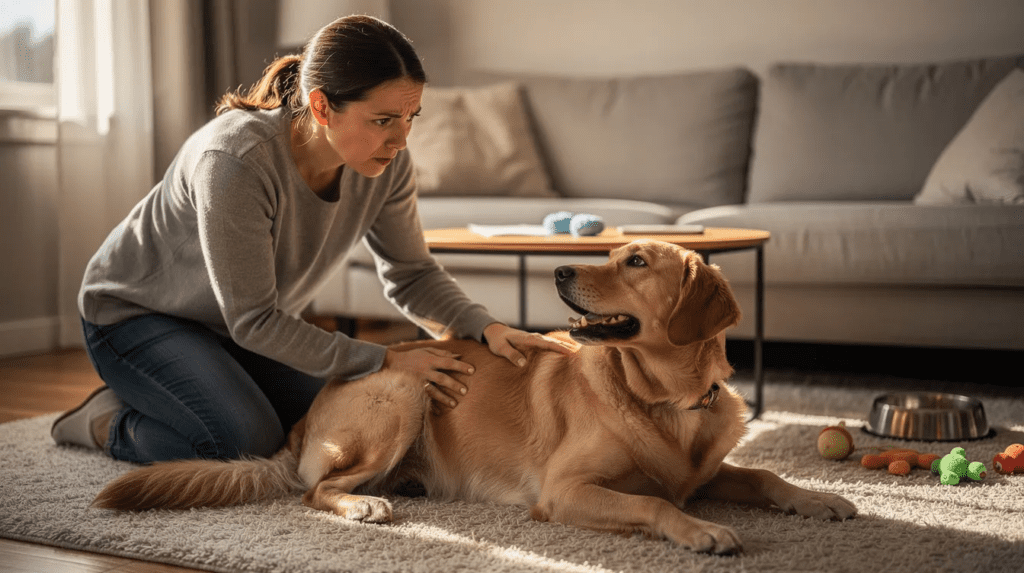
Common Triggers Behind Sudden Whining
Most dogs whine more when something specific triggers discomfort, anxiety, or strong anticipation. Identifying these patterns helps you rule out critical issues and find the root cause. Below are the major triggers to consider.
Pain, Illness, or Other Medical Conditions
Dogs often whine when they are hurt, sick, or experiencing age-related issues like arthritis. Suddenly, excessive whining can be an early sign of injury, ear infections, dental pain, or stomach upset. Whining can indicate a dog is in pain or discomfort, even when no visible wound is present.
Watch for signs that are often displayed alongside pain-related whining:
- Limping or stiffness on getting up
- Panting at rest or hiding
- Guarding parts of the body or refusing food
- Restlessness, a swollen or tight belly, or repeated attempts to vomit without bringing anything up, which may signal bloat or GDV, and needs emergency veterinary care.
Never assume whining is “just behavior” until medical causes have been considered. A vet visit verifies whether an underlying cause, like chronic pain or illness, is driving the whining behavior.
Separation Anxiety and Stress About Being Alone
Separation anxiety can cause excessive whining when a dog is left alone. Whining is a common vocalization, but some dogs may also bark, howl, pace, pant, drool, or have accidents indoors. Dogs with separation-related stress often begin reacting as soon as departure cues appear, like keys being picked up or shoes being put on.
Anxious whining often appears with pacing, drooling, panting, indoor accidents, or destructive behavior when the dog is alone. This type of whining is driven by distress, not stubbornness, and punishment after returning home does not help. A calmer environment, gradual alone-time practice, veterinary guidance, and professional behavior support may be needed for more serious cases. Reviewing available training programs and pricing can also help owners understand which level of support may fit their dog’s needs. Research reviews show that separation-related problems vary widely depending on the population studied, so it is better to focus on your dog’s specific pattern than assume one cause.
Attention Seeking and Learned Whining
Dogs whine to seek attention from their owners. Many dogs learn that whining makes people look at them, talk to them, hand over a favorite toy, or open a door. Attention-seeking behavior can reinforce whining if the dog receives immediate focus from the owner.
Common examples: a whining dog next to the sofa while someone watches TV, or a dog that whines at a desk chair during meetings until the person starts paying attention. Even negative reactions like saying “stop it” can function as a reward, reinforcing attention-seeking whining over time. This type of whining behavior is rarely an emergency, but it can become exhausting without clear rules and structure.
Changes in Routine, Environment, or Household
Dogs are sensitive to schedule changes. New work hours, school holidays, moving homes, or new family members can all trigger sudden whining. For example, a dog may whine more in June when children are suddenly home all day, or when a partner begins traveling for work.
This type of sudden behavior change reflects confusion or stress rather than disobedience. Track when your dog whines relative to specific changes to reveal patterns you can correct.
Fear, Noise Sensitivity, and Confusion
Whining can indicate fear or stress in dogs. Loud sounds such as thunderstorms, fireworks, or construction can make dogs whine, pace, or seek their person’s side for security. Look for fear-related body language: tucked tail, pinned ears, trembling, and avoidance of certain areas.
Older dogs may begin whining due to confusion or cognitive decline, especially at night. Senior dogs can develop changes in sleep-wake cycles, orientation, house training, and vocalization. If an older dog suddenly starts whining more, especially after dark, combine a veterinary check with calm routine changes and behavior support.

How to Respond Without Reinforcing the Behavior
When your dog’s whining suddenly increases, your response can either improve or intensify the habit. The first step is to rule out medical problems. Then, avoid rewarding whining and teach calm alternatives.
Rule Out Medical Emergencies First
Contact a veterinarian immediately if whining appears with symptoms like vomiting, difficulty breathing, collapse, a swollen abdomen, or severe lethargy. Consult a veterinarian to rule out medical issues causing whining, even if it feels like overreacting. No behavior plan should begin until health concerns have been addressed, since training cannot fix undiagnosed pain or illness.
Avoid Yelling, Punishment, or Harsh Corrections
Shouting or physical punishment can temporarily interrupt whining, but it often increases stress, confusion, or anxiety. Punishment does not teach a dog what to do instead and may cause subtle distress signals like lip licking, avoidance, or restlessness. Reward-based training and calm redirection are safer ways to teach quiet behavior, especially when whining is linked to fear, separation anxiety, or uncertainty.
Stop Accidentally Rewarding Attention-Seeking Whining
Each time you respond to whining by feeding, petting, or opening the door, the dog learns whining works. For attention-seeking whining, avoid instantly rewarding the sound with food, petting, door access, or excited attention. Wait for a brief pause in the whining, or ask for a simple cue like “sit,” “down,” or “place,” then reward the quiet behavior. This approach only applies after health, fear, and urgent needs have been ruled out. Never ignore a dog in genuine distress.
Examples of this approach:
- Step back from the crate until the whining pauses
- Turn away from the dog and wait for silence
- Pause at the doorknob until the whining stops, then immediately reward quiet behavior
Use Calm Structure and Predictable Routines
Many dogs whine less when they understand what happens next. Regular times for walks, meals, rest, and training help reduce anxiety-driven whining. Provide daily physical and mental stimulation to prevent boredom, which can lead dogs to whine for stimulation. Identify triggers to address the root cause of whining instead of only reacting when the sound starts.
Establish clear “on duty” and “off duty” times. Teach your dog when it is time to rest versus when it is time to play. This kind of structure is especially helpful for high-energy breeds and young dogs that feel uncomfortable without clear direction.
Obedience Skills That Help Dogs Settle
Training is not just about commands. It provides a language that helps dogs understand what to do with their energy and emotions instead of whining. Skills like the place command, down, stay, recall, and calm leash control address frustration and excitement directly through consistent dog obedience.
Place Command for Relaxing on a Mat or Bed
The place command asks a dog to go to a specific bed or mat and relax until released. It gives the dog a clear job instead of pacing and whining. Use it when guests enter, during meals, or when deliveries arrive. Reward the dog generously for lying calmly, then gradually increase duration and distractions. Place training teaches independent relaxation, which is especially valuable for dogs that whine when the owner is home but busy.
Down and Stay for Impulse Control
Solid down and stay cues help dogs manage excitement and frustration, two common reasons dogs whine. Practice in short bursts with mild distractions, then progress to harder scenarios like waiting at the door. Release the dog before whining builds, so the dog experiences success and learns that quiet patience brings rewards.
Recall and Calm Leash Control in Public
Good recall and loose leash walking reduce stress on a walk for both dog and owner. Dogs commonly whine on leash when they see other dogs, want to reach people, or feel trapped near traffic. Calm leash control relies on consistent signals and rewards for walking near you, not constant corrections. Practicing in gradually more distracting locations builds confidence and reduces stress-related vocalizing.
Using Training to Provide Mental and Physical Outlets
Dogs may whine to express boredom or lack of mental enrichment. Short daily training sessions, nosework games with hidden treats, or simple tracking exercises in the yard tire a dog mentally. A well-exercised mind often results in a quieter dog at home. View training as one of the most effective tools to protect your household from the frustration of constant whining.

Final Thoughts
Why is my dog whining so much all of a sudden? The answer almost always comes down to a message your dog is trying to send. Whether the cause is pain, anxiety, boredom, or a learned habit, sudden whining deserves attention rather than frustration.
Pay attention to patterns. Check for medical issues. Respond with calm structure rather than punishment. Most causes of dog whining can be improved through a combination of veterinary guidance, consistent routines, and behavior training focused on calm obedience. Professional help is recommended for persistent separation anxiety, and behaviorists can provide specialized guidance for complex issues.
If whining has become frequent, disruptive, or hard to understand, consider reaching out for professional obedience and behavior training support. A structured plan can help identify patterns, build calmer routines, and teach your dog better ways to settle. If pain, illness, panic, or age-related confusion may be involved, work with your veterinarian alongside training support.
FAQ
Below are additional questions pet parents commonly ask about sudden dog whining.
Why is my dog whining only at night all of a sudden?
Night whining can happen for several reasons: needing to go outside, new noises in the neighborhood, changes in sleeping arrangements, or age-related confusion. Provide a last potty break, keep a consistent bedtime routine, and consider a white noise machine for sound-sensitive dogs. If night whining appears suddenly with restlessness, pacing, or signs of pain, contact your vet to rule out discomfort, cognitive decline, or urinary issues.
Should I ignore my dog when they are whining?
Never ignore whining if there is any concern about pain, illness, fear, or an urgent need to go outside. Once health and safety are checked, mild attention-seeking whining can sometimes be managed by calmly pausing attention and then rewarding quiet moments. If you are unsure whether the whining is medical, emotional, or learned, consult a veterinarian and a qualified dog trainer before following a strict “ignore” plan.
Can dogs whine as a way of apologizing for bad behavior?
Dogs do not understand apologies the way humans do. Whining after an incident is usually a mix of stress, appeasement behavior, or confusion about the owner’s emotions, not guilt. Instead of talking to your dog as though they are seeking forgiveness, focus on clear, consistent training so the dog understands expectations going forward.
How long should I wait before seeing a vet about sudden whining?
Sudden whining paired with difficulty breathing, collapse, a swollen abdomen, seizures, or extreme restlessness requires immediate emergency care. If your dog is otherwise bright and eating normally but has new whining that persists for more than a day or two, schedule a vet appointment. Trust your instincts. If something feels off, contacting your vet is always a safe first step.
When is professional dog training helpful for whining?
Professional training can help address excessive whining related to leash frustration, excitement around guests, unclear routines, or long-standing attention-seeking habits. A trainer can observe patterns, teach skills like place, down, stay, recall, and calm leash control, and design a structured routine. If the whining is linked to separation anxiety, panic, pain, or senior-dog confusion, training should be paired with veterinary guidance.