Key Takeaways
Dogs lick for many reasons, including affection, habit, attention seeking, stress, submission, and the need to explore the world through taste. A few licks may be harmless, but excessive licking of people can become stressful, embarrassing, or unsafe.
Learning how to stop a dog from licking people starts with understanding why the behavior is happening, then using calm redirection, dog obedience, and consistent household manners.
- Yelling, pushing, or overreacting often increases excitement and can make dog licking worse.
- For attention-seeking licking, briefly remove attention, then redirect your dog to sit, down, stay, recall, or place command. If the licking is sudden, obsessive, anxious, painful, or paired with growling or snapping, pause training and speak with a vet or qualified professional.
- Rewards for calm behavior teach dogs that non-licking leads to attention.
- Sudden, obsessive, or out-of-character licking may involve medical conditions and should be discussed with a vet.
- If the dog’s excessive licking feels hard to manage, structured training can help.
Introduction
If you are wondering how to stop a dog from licking people, you are not alone. Many dogs lick people as a sign of affection, but when a dog is constantly licking guests, children, hands, legs, or faces, it can quickly become a problem for families looking for practical dog training.
Dog licking is usually not “bad behavior.” It is often linked to excitement, seeking attention, anxiety, stress, habit, or unclear boundaries. Young dogs and puppies may also lick because licking is an instinctive behavior connected to mothers, grooming, security, and social contact.
In this guide, you will learn how to stop licking calmly by changing your response, teaching better choices, and using simple obedience in daily life.
Why Dogs Lick People Excessively
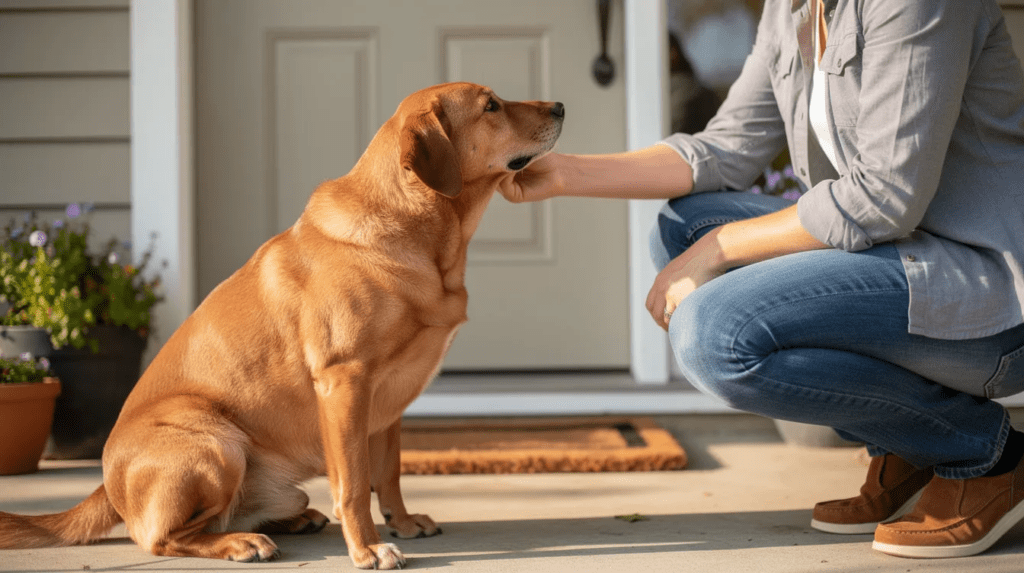
Dogs lick people for common reasons that often overlap. The first thing owners should do is look at when the dog is licking, who the person is, and what happens right after.
Affection-based licking is normal. Many dogs use their tongues to communicate closeness, much like a kiss. This starts with puppies, mothers, and littermates, then continues as a social behavior with people.
Attention seeking is another major cause. Dogs lick to get attention from their owners, and even eye contact, laughing, talking, or petting can reward licking people. Some dogs also lick because they crave attention or show submission.
Excitement licking often happens during a greeting, after a walk, during play, or when a pup is hungry and expecting food. Stress licking can look different. An anxious dog may lick hands, clothing, ears, skin, or the mouth area as a self-soothing behavior or stress response in a noisy room or unfamiliar environment.
Dogs may also lick to explore their environment through taste. Sweat, lotion, crumbs, and food smells on human skin can all create interesting taste cues. In some cases, sudden or repetitive licking may be linked to nausea, dental discomfort, pain, skin irritation, anxiety, or compulsive behavior, so a vet check is wise when the pattern is new, intense, or difficult to interrupt.
When Licking Becomes Excessive or Unwanted
A few licks are usually fine for most people. Excessive licking means the frequency, intensity, or context makes the behavior stressful, unsafe, or hard to interrupt.
Examples include:
- A dog licks guests’ hands and faces at the door.
- A dog will not stop licking children on the couch.
- A dog wakes owners at night by licking their face.
- A dog is licking one person nonstop and seems unable to stop.
Excessive licking can irritate some people’s skin, overwhelm guests, frighten visitors, and create tension in the family. It can also raise hygiene concerns, especially around the face, mouth, open wounds, young children, or people with weakened immune systems. If licking starts suddenly or is paired with pacing, drooling, appetite changes, bad breath, paw licking, licking one area, or licking objects, contact a vet. If there is swelling, wounds, severe pain, collapse, or a major behavior change, contact a vet immediately.
How Owners Accidentally Reward a Dog’s Licking
Dogs repeat what works. Owners often reward dog licking without being aware of it.
Common rewards include laughing, talking, pushing the dog away like a game, or giving a pet while saying “stop it.” To the dog, that is still attention. Children may squeal, hug, or run when licked, which can make the behavior stronger fast.
Changing human responses is a key part of how to stop a dog from licking people, especially when licking is driven by seeking attention.
Why Punishment Often Makes Dog Licking Worse
Yelling, pushing, or harsh corrections rarely stop licking in a reliable way. They often raise arousal, making the dog more frantic, jumpy, and likely to lick again.
Sensitive dogs may become anxious around hands and faces. Some may lick more nervously, avoid contact, or become defensive. Punishment also fails to teach the dog what to do instead.
Calm redirection and positive reinforcement create clearer communication and protect trust.
How to Stop a Dog From Licking People Calmly
The best answer to how to stop a dog from licking people is not force. It is structure, timing, and consistency.
Use a simple silent-withdrawal approach. When your dog starts licking, calmly look away, stand up, fold your arms, or move your hands out of reach. Do not talk, scold, laugh, or make the moment exciting. Once the licking stops, give an alternative command such as “sit,” “down,” or “place,” then reward calm behavior.
Reward only when the tongue is off people. Praise your dog for calm behavior to reinforce good habits, and use treats when the dog chooses stillness. Using alternative commands can redirect dogs from licking to acceptable behaviors.
Also redirect licking by providing chew toys or puzzles. Redirecting a dog’s energy with toys can reduce opportunities for face licking, and an interactive puzzle can distract a bored dog. Providing mental stimulation can reduce licking caused by boredom.
Obedience Skills That Help Reduce Licking
Basic dog obedience gives you and your dog a shared language. These skills make it easier to interrupt and replace licking.
- Sit: Teach that a seated dog gets attention, while a licking dog does not.
- Down: Helps the dog relax and reduces face-level contact.
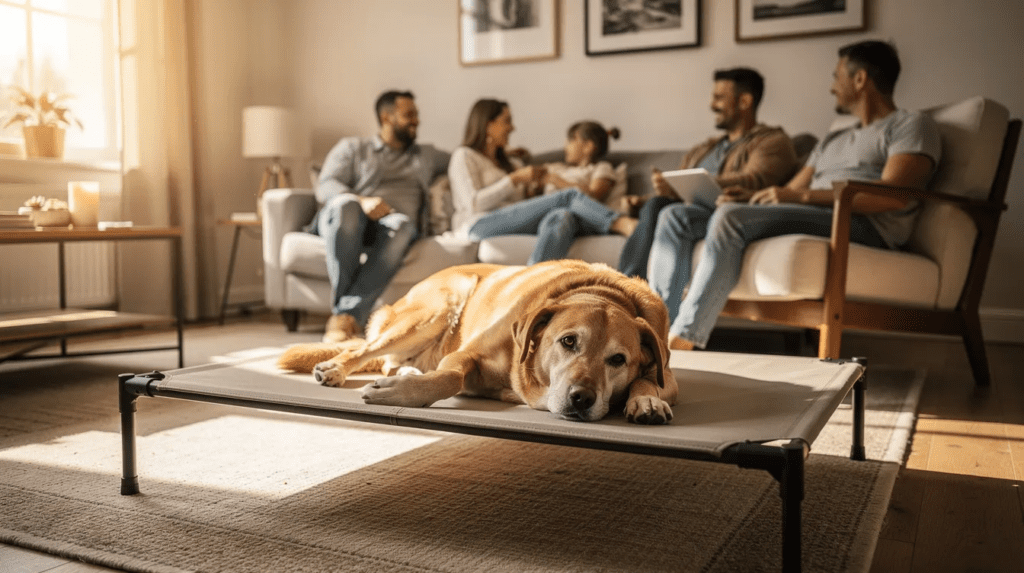
- Place command: Sends the dog to a bed, mat, or cot during guests, dinner, or busy moments.
- Stay: Helps the dog hold position instead of rushing forward to lick.
- Recall: Call the dog away from a person, then reward with treats, praise, or place.
Short daily training sessions of 5 to 10 minutes build focus. Some owners also teach fun cues like sit pretty, but practical, calm behaviors should come first. Focus on rewarding the behavior you want, such as sitting calmly, holding place, or coming when called, instead of only reacting after the dog starts licking.
Building Better Greeting and Household Manners
Structured calm greetings and clear household manners often reduce licking more than corrections alone.
Try this front-door routine:
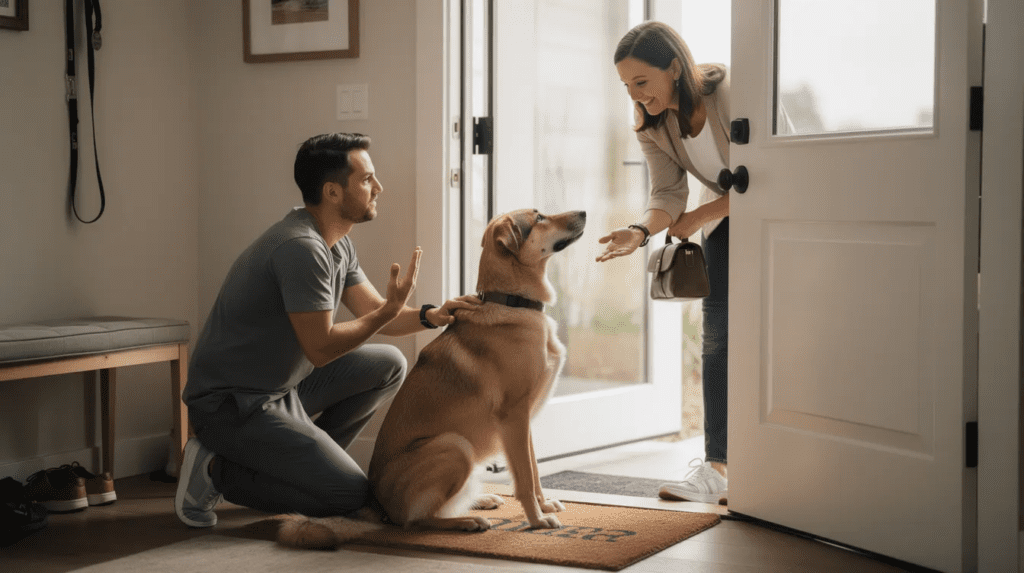
- Put the dog on leash before guests enter.
- Cue sit, down, or place command.
- Ask guests to ignore the dog until calm.
- Allow contact only when the dog keeps four paws down and does not lick.
Establish consistent boundaries to avoid confusing your dog. For example, “no licking faces” or “no licking guests.” Everyone should respond the same way, especially children.
Take your dog for regular exercise to reduce boredom and stress. A daily walk, sniffing games, training, chew toys, and calm play can help a dog feel calm before social moments.
When Dog Licking Needs a Vet Check
Most licking is behavioral, but sudden or extreme changes need attention.
Call your vet if licking appears with:
- Drooling, nausea, vomiting, or appetite changes
- Restlessness, pacing, or signs of pain
- Dental problems, bad breath, or trouble eating
- Skin irritation, wounds, or licking one area
- New obsessive patterns around one person
Track when licking happens, how long it lasts, and any other symptoms. Ruling out medical conditions makes training safer and more effective.
When Professional Training Can Help With Excessive Licking
Some dogs have strong habits, high arousal, low structure, or anxiety that make licking hard to change at home, especially when owners are unsure which training programs and pricing fit the behavior.
Professional training may help if your dog knocks over children, jumps and licks guests despite months of effort, becomes mouthy when blocked, or cannot settle around visitors. A trainer can identify whether the issue is obedience, anxiety, unclear rules, or a mix of factors.
Real-world practice matters. Dogs need to learn calm behavior in the living room, at the door, around visitors, near parks, and in public places.
Final Thoughts
Dog licking is normal communication, but you do not have to accept constant or overwhelming licking from your dog. The goal is not to remove affection. The goal is to teach polite ways to communicate.
The most practical answer to how to stop a dog from licking people is to understand the trigger, stop accidentally rewarding it, use calm redirection, and reinforce simple obedience with clear rules.
Dogs learn fastest when everyone stays calm, responds the same way, and rewards quiet behavior instead of reacting only when the dog licks. Speak with your veterinarian for health concerns, and contact a professional trainer if licking has become frequent, stressful, or difficult to manage alone.
FAQ
Is it okay to let my dog lick me sometimes?
Yes, occasional licking is usually fine for healthy adults, and most people view it as affection. Set clear limits, especially around the face and mouth. People with open wounds, hygiene concerns, or weakened immune systems may prefer no licking.
Why does my dog only lick certain people?
Some people move more, use excited voices, smell like food, or have sweaty skin that can taste good. Dogs may also lick their favorite person more, especially the one who feeds, walks, or plays with them most.
How long does it take to stop a dog’s excessive licking?
Some dogs improve quickly when the household stops rewarding licking and practices calm redirection consistently. Long-standing habits, anxiety-driven licking, or licking mixed with jumping may take longer. Progress looks like shorter episodes, calmer greetings, and a better response to commands. If the behavior is not improving, feels obsessive, or comes with medical or aggression concerns, get help sooner.
Can I use bitter sprays or scents on my skin?
Dog-safe bitter sprays may help in the short term, but they should not replace training. Ask your vet first, use only products labeled safe for dogs, and avoid the eyes and nose. Teaching sit, stay, recall, or place creates better long-term results.
What if my dog growls or snaps when I try to stop licking?
Growling or snapping is a serious sign that the dog is uncomfortable, stressed, or conflicted. Do not punish the growl. Create distance, stop handling the dog, check for pain with a vet, and contact a qualified behavior professional if there is risk to visitors or children.